Synthetic polymers are quite resistant to environmental degradation process and are responsible for accumulation of polymer solid waste material. New biodegradable synthetic polymers have been designed and developed. These polymers contain similar functional groups as present in biopolymers, e.g., aliphatic polyesters Biopolymers are polymers of amino acids or carbohydrates which are linked to each other by peptide or glycosidic linkages as shown below:
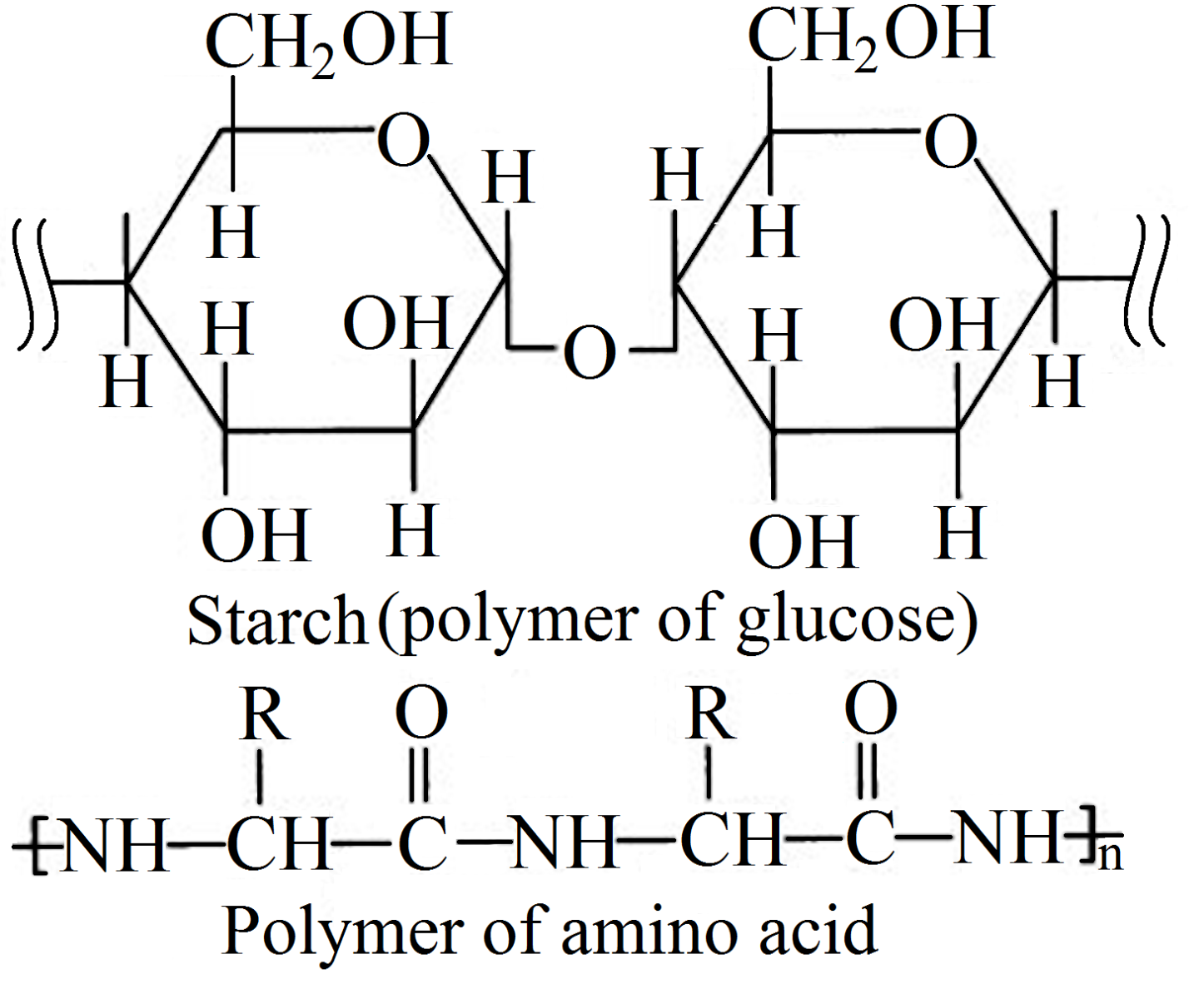
Polymer of amino acid Biopolymer can or cannot be biodegradable. e.g., protein, starch etc., are biodegradable but keratin are non-biodegradable. Biodegradable polymer are polymers which can be degradable always, e.g., DHBV nylon-2, nylon-6.