Question
  1. Taking example of a small pond, explain how the four components of an ecosystem function as a unit.
  2. Name the type of food chain that exist in a pond.

Answer

  1. The four component in an ecosystem functions as unit as follows:
  1. Productivity: This is represented by the autotrophic phytoplanktons same algae and the floating and marginal plants found at the edges.

  2. Energy flow: Represented by water in the pond with all the dissolved organic and inorganic substances, the solar energy and other climate conditions that regulate the rate of function of the pond. The consumers are represented by the 200 planktons and bottom dwelling forms.

  3. Decompositions: The decomposers are the fungi bacteria and flagellates abundant at the bottom of the pond.

  4. Nutrient cycling: The pond ecosystem converts inorganic material into organic material using solar energy by the autotrophs. The autotrophs are eaten up by hetrotrophs, decomposition and mineralisation of dead matter for resuse by autotrophy is done by decomposers.

  1. Grazing food chain exists in a pond.

Need a full question paper?

Generate a complete, print-ready paper with questions like this in minutes — across 16+ boards, with answer keys.
Start Generating Free

Similar questions

Describe the functions of the following:
Vagina.
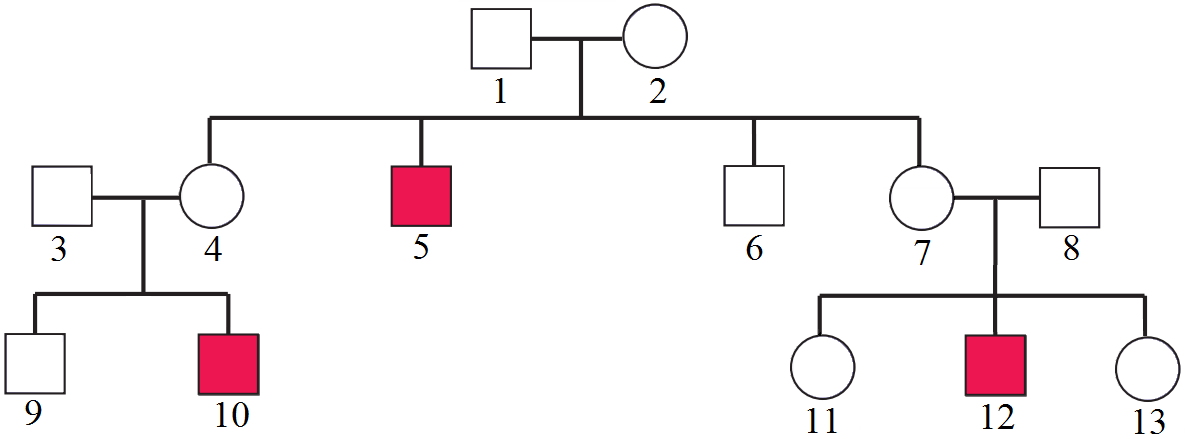
Haemophilia is a sex–linked recessive disease. Study the pedigree analysis given below showing the inheritance of the disease in a family and answer the questions that follow.

  1. Give the evidence from the above analysis which suggests that the disease is:
    1. Sex–linked and,
    2. Caused by a recessive allele.
  2. Write the possible genotypes of the individuals ‘2’ and ‘5’.
What is meant by R cells and S cells with which Frederick Griffith carried out this experiments on Streptococcus pneumoniae? What did he prove from these experiments?
How did Hershey and Chase differentiate between DNA and protein in their experiment while proving that DNA is the genetic material?
(a) IVF is a very powerful method these days that is helping childless couples to bear a child. Describe the different steps that are carried out in this technique.
(b) Would you consider Gamete Intrafallopian transfer (GIFT) as on IVF? Give a reason in support of your answer.
Draw a neat diagram of the female reproductive system and label the parts associated with the following.
  1. Production of gamete.
  2. Site of fertilisation.
  3. Site of implantation.
  4. Birth canal.
Raj was a known sportsman in his school. While returning home he found some unknown miscreants beating a young fellow. He tried to drive them off, but by that time the fellow died of injury. The police arrested Raj and he was put on trial. The judge being convinced by Raj's plea, ordered for DNA fingerprinting reports.
  1. What is the basis of DNA fingerprinting?
  2. Explain the steps in DNA fingerprinting.
  3. Write the applications of DNA fingerprinting.
  4. Raj's fingerprints on the dead body were sufficient to convict him but the judge asked for authentic proof. What values can be observed by the judge?
Write about chemical evolution in brief.
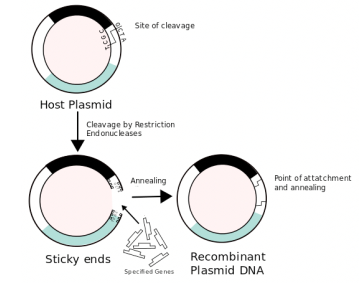
Recombinant DNA vectors are typically attenuated viruses or bacteria that are unrelated to the pathogen of interest.
These vectors can penetrate human cells and often replicate within them, but do not cause disease in the host.

Image
i. A recombinant vector with a gene of interest inserted within the gene of a-galactosidase enzyme, is introduced into a bacterium. Explain the method that would help in selection of recombinant colonies from non-recombinant ones.
ii. Why is this method of selection referred to as insertional inactivation?
Explain the two complexities that are observed in the process of transcription in eukaryotes and not in prokaryotes.