MCQ
${^\text{5}}\text{C}_{\text{1}}+{^\text{5}}\text{C}_{\text{2}}+{^\text{5}}\text{C}_{\text{3}}+{^\text{5}}\text{C}_{\text{4}}+{^\text{5}}\text{C}_{\text{5}}$is equal to:
  • A
    30
  • 31
  • C
    32
  • D
    33

Answer

Correct option: B.
31
${^\text{5}}\text{C}_{\text{1}}+{^\text{5}}\text{C}_{\text{2}}+{^\text{5}}\text{C}_{\text{3}}+{^\text{5}}\text{C}_{\text{4}}+{^\text{5}}\text{C}_{\text{5}}$
$={^\text{5}}\text{C}_{\text{1}}+{^\text{5}}\text{C}_{\text{2}}+{^\text{5}}\text{C}_{\text{2}}+{^\text{5}}\text{C}_{\text{1}}+{^\text{5}}\text{C}_{\text{5}}$
$=2\times{^\text{5}}\text{C}_{\text{1}}+2\times{^\text{5}}\text{C}_{\text{2}}+{^\text{5}}\text{C}_{\text{5}}$
$= 2\times5+2\times\frac{5!}{2!3!}+1$
$=10+20+1$
$=31$

Need a full question paper?

Generate a complete, print-ready paper with questions like this in minutes — across 16+ boards, with answer keys.
Start Generating Free

Similar questions

The equation of circle whose centre lies on $3x - y - 4 = 0$ and$x + 3y + 2 = 0$ and has an area $154$ square units is
If the points $A(6, - 1),\;B{\rm{ }}(1,\,3)$ and $C(x,\,8)$ be such that $AB = BC,$ then $x = $
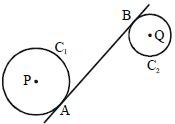
In the figure shown, radius of circle $C_1$ be $ r$ and that of $C_2$ be $\frac{r}{2}$ , where $r= \frac {1}{3} PQ,$ then length of $AB$ is (where $P$ and $Q$ being centres of $C_1$ $\&$ $C_2$ respectively)
Let in a series of $2 n$ observations, half of them are equal to $a$ and remaining half are equal to $-a.$ Also by adding a constant $b$ in each of these observations, the mean and standard deviation of new set become $5$ and $20 ,$ respectively. Then the value of $a^{2}+b^{2}$ is equal to ....... .
The set of values of $x$ satisfying the equation,${2^{\tan \,\,\left( {x\,\, - \,\,{\textstyle{\pi  \over 4}}} \right)}}$ $- 2$${\left( {0.25} \right)^{\frac{{{{\sin }^2}\,\left( {x\,\, - \,\,{\textstyle{\pi  \over 4}}} \right)}}{{\cos \,\,2x}}}}$ $+ 1 = 0$, is :
The Domain of function $f(x) = {\log _e}(x - [x])$ is
The number of common tangents of the circles given by $x^2 +y^2 - 8x - 2y + 1 = 0$ and $x^2 + y^2 + 6x + 8y = 0$ is
Solution of $0<|3\text{x}+1\big|<\frac{1}{3} $ is:
Three dice are rolled. If the probability of getting different numbers on the three dice is $\frac{p}{q}$, where $p$ and $q$ are co-prime, then $q- p$ is equal to
Let $A_1, A_2, \ldots \ldots, A_m$ be non-empty subsets of $\{1,2,3, \ldots, 100\}$ satisfying the following conditions:

$1.$ The numbers $\left|A_1\right|,\left|A_2\right|, \ldots,\left|A_m\right|$ are distinct.

$2.$ $A_1, A_2, \ldots, A_m$ are pairwise disjoint.(Here $|A|$ donotes the number of elements in the set $A$ )Then, the maximum possible value of $m$ is