MCQ
The $AC$ produced in India changes its direction in every:
  • $\frac{1}{100}\text{second}$
  • B
    $100$ second
  • C
    $50$ second
  • D
    None of these

Answer

Correct option: A.
$\frac{1}{100}\text{second}$

In India, the frequency of $AC$ voltage is $50 Hz.$
It means $50$ waves will be produced in $1 s.$
In one wave, the direction is changed $2$ times.
Thus, in $50$ waves, the direction will be altered $50 \times 2 = 100$ times.
i.e. the direction is changed $100$ times in $1 s.$
Thus the direction is changed in every $\frac{1}{100}\text{second}$

Need a full question paper?

Generate a complete, print-ready paper with questions like this in minutes — across 16+ boards, with answer keys.
Start Generating Free

Similar questions

The temperature coefficient of resistance of a semiconductor
An electron of a stationary hydrogen atom passes from the fifth energy level to the ground level. The velocity that the atom acquired as a result of photon emission will be
"The work per unit of charge required to move a charge from a reference point to a specified point, measured in joules per coulomb or volts. The static electric field is the negative of the gradient of the electric potential." comments are given below, select the correct one:
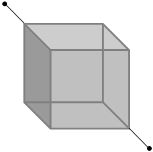
Twelve wires of equal length and same cross-section are connected in the form of a cube. If the resistance of each of the wires is $R$, then the effective resistance between the two diagonal ends would be
An elementary particle of mass $m$ and charge $ + e$ is projected with velocity $v$ at a much more massive particle of charge $Ze,$ where $Z > 0.$What is the closest possible approach of the incident particle
A parallel beam of monochromatic light of wavelength $600 \mathrm{~nm}$ passes through single slit of $0.4 \mathrm{~mm}$ width. Angular divergence corresponding to second order minima would be  . . . . . .$\times 10^{-3} \mathrm{rad}$.
The moment of inertia of a uniform semicircular wire of mass M and radius r about a line perpendicular to the plane of the wire through the centre is:
The main drawback of huygen's theory was
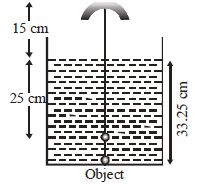
A concave mirror is placed over a beaker containing water of $\mu = 1.33$ and image of the object placed at the bottom of beaker is formed at a distance of $25\, cm$ from the top, then focal length of the mirror is nearly......$cm$
Consider a thin spherical shell of radius $R$ with its centre at the origin, carrying uniform positive surface charge density. The variation of the magnitude of the electric field $|\vec{E}(r)|$ and the electric potential $V(r)$ with the distance r from the centre, is best represented by which graph?