MCQ
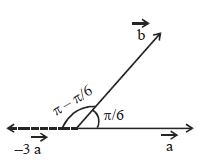
The angle between vectors $\vec a$ and $\vec b$ is $\frac{\pi }{6}$. The angle between vectors $ - 3\vec a$ and $ 2\vec b$ is
  • A
    $\frac{\pi }{3}$
  • B
    $\frac{\pi }{2}$
  • C
    $\frac{7\pi }{6}$
  • $\frac{5\pi }{6}$

Answer

Correct option: D.
$\frac{5\pi }{6}$
d

Need a full question paper?

Generate a complete, print-ready paper with questions like this in minutes — across 16+ boards, with answer keys.
Start Generating Free

Similar questions

In a head-on elastic collision of two bodies of equal masses:
The apparent weight of the body, when it is travelling upwards with an acceleration of $2m/{s^2}$ and mass is $10\, kg,$ will be ......... $N$
The resultant of two rectangular simple harmonic motions of the same frequency and equal amplitudes but differing in phase by $\frac{\pi }{2}$ is
The contact force exerted by a body A on another body B is equal to the normal force between the bodies. We conclude that:
  1. The surfaces must be frictionless.
  2. The force of friction between the bodies is zero.
  3. The magnitude of normal force equals that of friction.
  4. The bodies may be rough but they don't slip on each other.
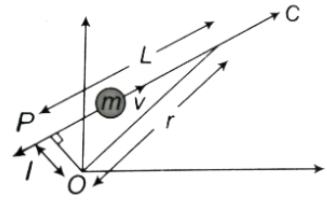
A particle of mass $m$ moves along line $PC$ with velocity $v$ as shown.  What is the angular momentum of the particle about $O$ ​
Which of the following is true about the angular momentum of a cylinder down a slope without slipping
Projectiles $A$ and $B$ are thrown at angles of $45^{\circ}$ and $60^{\circ}$ with vertical respectively from top of a $400 \mathrm{~m}$ high tower. If their ranges and times of flight are same, the ratio of their speeds of projection $v_A: v_B$ is :
Suppose there is a hole in a copper plate. Upon heating the plate, diameter of hole would:
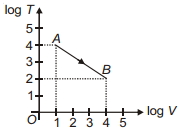
Figure shows, the adiabatic curve on a $\log T$ and log $V$ scale performed on ideal gas. The gas is ............
The motion of a particle of mass m is given by $\text{x}=0$ for $\text{t} < 0\ \text{s},$ $\text{x}(\text{t})=\text{A}\sin4\text{p}\ \text{t}$ for $0<\text{t}<(1/ 4)\ \text{s}(\text{A}>\text{o}),$ and $\text{x}=0$ for $\text{t}>(1/4)\ \text{s}.$ Which of the following statements is true?