MCQ
The angle of minimum deviation for thin prism of refractive index $\mu$ is :
- A$(1-\mu) A$
- ✓$(\mu-1) A$
- C$(\mu+1) A$
- D$(\mu+1) A^{2}$
Generate a complete, print-ready paper with questions like this in minutes — across 16+ boards, with answer keys.
Three electric bulbs of rating 60W each are joined in series and then connected to electric mains. The power consumed by these three bulbs will be
|
(a) 180 W |
(b) 60 W |
(c) 20 W |
(d) |
A point source of light B is placed at a distance L in front of the centre of a mirror of width d hung vertically on a wall. A man walks in front of the mirror along a line parallel to the mirror at a distance 2L from it as shown. The greatest distance over which he can see the image of the light source in the mirror is

|
(a) d/2 |
(b) d |
(c) 2d |
(d) 3d |
Five equal resistances each of resistance R are connected as shown in the figure. A battery of V volts is connected between A and B. The current flowing in AFCEB will be

|
(a) |
(b) |
(c) |
(d) |
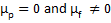
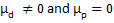
If the magnetic dipole moment of an atom of diamagnetic material, paramagnetic material and ferromagnetic material denoted by  respectively then
|
(a) |
(b) |
|
(c) |
(d) |
Assertion : A potentiometer of longer length is used for accurate measurement.
Reason : The potential gradient for a potentiometer of longer length with a given source of e.m.f. becomes small.
|
(a) If both assertion and reason are true and the reason is the correct explanation of the assertion. |
|
(b) If both assertion and reason are true but reason is not the correct explanation of the assertion. |
|
(c) If assertion is true but reason is false. |
|
(d) If the assertion and reason both are false. |