MCQ
The angular momentum of an electron in an orbit is quantized because it is a necessary condition for the compatibility with:
  • A
    Wave nature of electron
  • Particle nature of electron
  • C
    Pauli's exclusion behaviour
  • D
    None of these

Answer

Correct option: B.
Particle nature of electron

Quantization of angular momentum comes from the particle nature of electrons, and all of its postulates.

Need a full question paper?

Generate a complete, print-ready paper with questions like this in minutes — across 16+ boards, with answer keys.
Start Generating Free

Similar questions

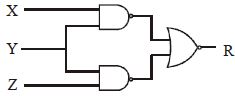
Figure shows $2 NAND$ gates followed by a $NOR$ gate. The system is equivalent to one gate $G$ with inputs $X, Y, Z$ and output $R$. What is $G$ ?
Which one of the following is known as Saptarishi
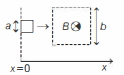
A square-shaped conducting wire loop of dimension moving parallel to the $X$-axis approaches a square region of size $b(a < b)$, where a uniform magnetic field $B$ exists pointing into the plane of the paper (see figure). As the loop passes through this region, the plot correctly depicting its speed $v$ as a function of $x$ is
If two soap bubbles of different radii are connected by a tube:
A deutron is bombarded on $_8{O^{16}}$ nucleus and $\alpha$-particle is emitted. The product nucleus is
A totally reflecting small plane mirror placed horizontally faces a parallel beam of light as hown in figure. The mass of mirror is $20\, gm$. Assume that there is no absorption in the lens and that $30\%$ of the light emitted by the source goes through the lens. Find the power of the source needed to support the weight of the mirror ............... $MW$ (take $g = 10\, m/s^2$) :-
Particle nature and wave nature of electromagnetic waves and electrons can be shown by
An object $5cm$ tall is placed $1m$ from a concave spherical mirror which has a radius of curvature of $20cm$ The size of the image is......$cm$
Heat radiations propagate with the speed of
An electric dipole of moment $\overrightarrow p $ placed in a uniform electric field $\overrightarrow E $ has minimum potential energy when the angle between $\overrightarrow p $ and $\overrightarrow E $ is