MCQ
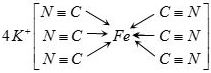
The bond in ${K_4}[Fe{(CN)_6}]$ are:
  • A
    All ionic
  • B
    All covalent
  • C
    Ionic and covalent
  • Ionic, covalent and co-ordiante covalent
Answer

Correct option: D.
Ionic, covalent and co-ordiante covalent
d
(d)

Need a full question paper?

Generate a complete, print-ready paper with questions like this in minutes — across 16+ boards, with answer keys.

Start Generating Free

Similar questions

Which one is the correct order of the size of the iodine species
$\begin{matrix}
   \,\,\,\,\,\,\,\,\,\,\,\,\,\,\,\,\,\,\,\,\,\,\,\,\,\,\,\,\,\,\,\,\,\,\,\,\,\,\,\,\,\,\,\,O  \\
   \,\,\,\,\,\,\,\,\,\,\,\,\,\,\,\,\,\,\,\,\,\,\,\,\,\,\,\,\,\,\,\,\,\,\,\,\,\,\,\,\,\,\,\,\,||  \\
   HO-\underset{(3)}{\mathop{C{{H}_{2}}}}\,-\underset{(2)}{\mathop{C{{H}_{2}}}}\,-\underset{(1)}{\mathop{C}}\,-H  \\
\end{matrix}$

Which conformer of above compound is most stable (consider conformer across $(C_2 -C_3)$

$d$ -tartaric acid and meso tartaric acid are
The strongest acid among the following aromatic compounds is
In $3$ -methyl- $2$ -cyclohexenone which hydrogen cannot undergo deuterium  exchange when it reacts with $CH_3O^{\circleddash} /CH_3OD$?
The correct sequence of ligands in the order of decreasing field strength is:
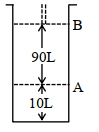
Consider the figure provided.

$1 \mathrm{~mol}$ of an ideal gas is kept in a cylinder, fitted with a piston, at the position $\mathrm{A}$, at $18^{\circ} \mathrm{C}$. If the piston is moved to position $B$, keeping the temperature unchanged, then ' $x$ ' $L$ atm work is done in this reversible process.

$\mathrm{x}=$ . . . . . . $\mathrm{L} \mathrm{atm.} \mathrm{(nearest} \mathrm{integer)}$

[Given : Absolute temperature $={ }^{\circ} \mathrm{C}+273.15$, $\left.\mathrm{R}=0.08206 \mathrm{~L} \mathrm{~atm} \mathrm{~mol}^{-1} \mathrm{~K}^{-1}\right]$
Which is the most suitable reagent among the following distinguish compound $(3)$  from the others?

$(1)\,CH_3C \equiv C - CH_3$   $(2)\,CH_3CH_2 -CH_2 -CH_3$

$(3)\, CH_3CH_2C \equiv CH$    $(4)\, CH_3CH = CH_2$

In the following reaction
Aldehyde $+$ Alcohol $\xrightarrow{{HCl}}$ Acetal


$HCHO$            $^tBuOH$
$CH_3CHO$       $MeOH$ 

The best combination is

Which of the following is the least reactive in the case of bromination :