MCQ
The correct decreasing order for metallic character is
- ✓$Na > Mg > Be > Si > P$
- B$P > Si > Be > Mg > Na$
- C$Si > P > Be > Na > Mg$
- D$Be > Na > Mg > Si > P$
Generate a complete, print-ready paper with questions like this in minutes — across 16+ boards, with answer keys.
$(CH_3)_2CHCH_2C \equiv N \xrightarrow{HCl,{{H}_{2}}O}$ compound $A \xrightarrow[2.\,{{H}_{2}}O]{1.\,LiAl{{H}_{4}}}$ compound $B \xrightarrow[C{{H}_{2}}C{{l}_{2}}]{PCC}$ compound $C$
$Z\,\xrightarrow{{PC{l_5}}}\,X\,\xrightarrow[\Delta ]{{{\text{Alc}}{\text{.KOH}}}}\,Y\,\xrightarrow{{{H_2}O/{H^ \oplus }}}\,\mathop Z\limits_{{\text{(Major)}}} \,,\,\,Z$ is
$M{n_{(S)}}|Mn_{(aq)}^{ + 2}(0.4\,M)||Sn_{(aq)}^{ + 2}(0.04\,M)|S{n_{(S)}}$,
Calculate free energy change $(\Delta G)$ at $298\,K$ .
Given :$E_{M{n^{ + 2}}|Mn}^o = \, - \,1.18\,V\,;\,E_{S{n^{ + 2}}|Sn}^o\, = \, - \,0.14\,volt$
$\frac{{2.303\,RT}}{F} = 0.06$
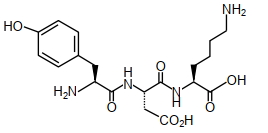
If the absolute values of the net charge of the peptide at $pH =2, pH =6$, and $pH =11$ are $\left| z _1\right|,\left| z _2\right|$ and $\left|z_3\right|$, respectively, then what is $\left|z_1\right|+\left|z_2\right|+\left|z_3\right|$ ?