MCQ
The correct stability order for $N_2$ and its given ions is :-
  • $N_2 > N_2^+ >  N_2^- >  N_2^{-2}$
  • B
    $N_2^-  >  N_2^+  > N_2 > N_2^{-2}$
  • C
    $N_2^+  > N_2^-  > N_2 > N_2^{-2}$
  • D
    $N_2 > N_2^+ =  N_2^- >  N_2^{-2}$

Answer

Correct option: A.
$N_2 > N_2^+ >  N_2^- >  N_2^{-2}$
a
Bond stability $\propto$ bond order

Bond order $=1 / 2 \times\left(\mathrm{N}_{\mathrm{B}}-\mathrm{N}_{\mathrm{AB}}\right)$

Order of filling MO is:

1. $\mathrm{N}_{2}$ :

valence electrons $=5+5=10$

$(\sigma 2 \mathrm{s})^{2}(\sigma * 2 \mathrm{s})^{2}(\sigma 2 \mathrm{p})^{2}(\pi 2 \mathrm{p})^{4}$

$\mathrm{BO}=1 / 2 \times(6-0)=3$

2. $\mathrm{N}_{2}^{+}$

valence electrons $=5+5-1=9$

$(\sigma 2 \mathrm{s})^{2}(\sigma * 2 \mathrm{s})^{2}(\sigma 2 \mathrm{p})^{2}(\pi 2 \mathrm{p})^{3}$

$\mathrm{BO}=1 / 2 \times(5-0)=2.5$

$3 . \mathrm{N}_{2}^{-}$

valence electrons $=5+5+1=11$

$(\sigma 2 s)^{2}(\sigma * 2 s)^{2}(\sigma 2 p)^{2}(\pi 2 p)^{4}\left(\pi^{*} 2 p\right)^{1}$

$\mathrm{BO}=1 / 2 \times(6-1)=2.5$

4. $\mathrm{N}_{2}^{2-}$

valence electrons $=5+5+2=12$

$(\sigma 2 \mathrm{s})^{2}(\sigma * 2 \mathrm{s})^{2}(\sigma 2 \mathrm{p})^{2}(\pi 2 \mathrm{p})^{4}\left(\pi^{*} 2 \mathrm{p}\right)^{2}$

$\mathrm{BO}=1 / 2 \times(6-2)=2$

bond strength or stability: $\mathrm{N}_{2}>\mathrm{N}_{2}^{+}>\mathrm{N}_{2}^{-}>\mathrm{N}_{2}^{2-}$

$\mathrm{N}_{2}^{+}$

here $\mathrm{N}_{2}^{+}$ and $\mathrm{N}_{2}^{-}$ have same bond order but later has one electron in antibonding orbital which reduces its stability as compared to $\mathrm{N}_{2}^{+}$

Therefore, A is correct.

Need a full question paper?

Generate a complete, print-ready paper with questions like this in minutes — across 16+ boards, with answer keys.
Start Generating Free

Similar questions

For the First order reaction, the half life is $5$ minutes when $[A] = 0.1\,M$. If the concentration of $[A]$ becomes twice then half life becomes
A gas formed by the action of alcoholic $KOH$ on ethyl iodide, decolourises alkaline$KMn{O_4}$. The gas is
Colour of the bead in borax bead test is mainly due to the formation of
When ammonia is added to a cupric salt solution, the deep blue colour is observed it is due to the formation of 
Ethylene glycol is used as an anti-freezing agent. Calculate the amount of ethylene glycol to be added to $4\, kg$ of water to prevent it from freezing at $-6\,^oC$, ($K_f$ for water $= 1.85\, K\, mol^{-1}\, Kg$) (molar mass of $(CH_2OH)_2 = 62\, g/mol)$ .......... $gm$.
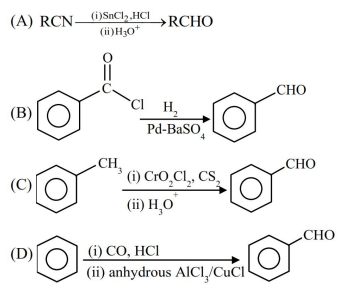
Match List-I with List-II
List-I 
Image
List-II
(I) Etard reaction
(II) Gatterman -Koch reaction
(III) Rosenmund reduction
(IV) Stephen reaction
Choose the correct answer from the options given below :
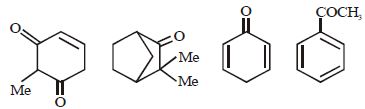
How many of given compounds show Tautomerism
The standard enthalpy of formation $(\Delta _f\,H^o_{298})$ for methane, $CH_4$ is $-74.9\,kJ\,mol^{-1}$ . In order to calculate the average energy given out in the formation of a $C - H$ bond from this it is necessary to know which one of the following?
Silver is removed electrically from $200\,ml$ of a $0.1\,N$  solution of $AgN{O_3}$ by a current of $ 0.1$  ampere. How long will it take to remove half of the silver from the solution .............. $\mathrm{sec}$
$CaC{O_{3(s)}}$ $\rightleftharpoons$ $Ca{O_{(s)}} + C{O_{2(g)}}$ which of the following expression is correct