MCQ
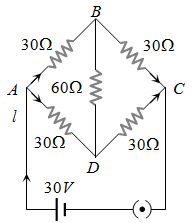
The current between $B$ and $D$ in the given figure is
  • A
    $1\ amp$
  • B
    $2\ amp$
  • Zero
  • D
    $0.5\ amp$

Answer

Correct option: C.
Zero
Zero  

Need a full question paper?

Generate a complete, print-ready paper with questions like this in minutes — across 16+ boards, with answer keys.
Start Generating Free

Similar questions

Kinetic energy with the electrons are emitted from the metal surface due to photoelectric effect is:
The temperature $(T)$ dependence of resistivity $(r)$ of a semiconductor is represented by
When a distant object is viewed through an astronomical telescope, its image will be :
A radioactive sample at any instant has its disintegration rate 5000 disintegration per minute. After 5 minutes, the rate is 1250 disintegrations per minute. Then, the decay constant (per minute) is(a) 0.8 In 2(b) 0.4 In 2(c) 0.2 In 2(d) 0.1 In 2
       
Under what condition will the strength of current in a wire of resistance R be the same for connection is series and in parallel of n identical cells each of the internal resistance r?
When plate voltage in diode valve is increased from 100 volt to 150 volt then plate current increases from 7.5 mA to 12 mA. The dynamic plastic resistance will be(a) 10 kW                                           (b) 11 kW(c) 15 kW(d) 11.1 kW
       
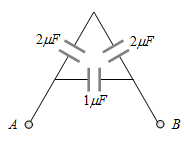
What is the effective capacitance between $A$ and $B$ in the following figure
The potential difference applied to an X-ray tube is increased. As a result, in the emitted radiation:
To an observer on the earth the stars appear to twinkle. This can be ascribed to(a) The fact that stars do not emit light continuously(b) Frequent absorption of star light by their own atmosphere(c) Frequent absorption of star light by the earth's atmosphere(d) The refractive index fluctuations in the earth's atmosphere


Assertion : Electron capture occurs more often than positron emission in heavy elements.
Reason    : Heavy elements exhibit radioactivity.(a) If both assertion and reason are true and the reason is the correct explanation of the assertion.(b) If both assertion and reason are true but reason is not the correct explanation of the assertion.(c) If assertion is true but reason is false.(d) If the assertion and reason both are false.