MCQ
The de$-$Broglie wavelength is proportional to
  • A
    $\lambda \propto \frac{1}{V}$
  • B
    $\lambda \propto \frac{1}{m}$
  • $\lambda \propto^{\frac{1}{p}}$
  • D
    $\lambda \propto p$

Answer

Correct option: C.
$\lambda \propto^{\frac{1}{p}}$

Need a full question paper?

Generate a complete, print-ready paper with questions like this in minutes — across 16+ boards, with answer keys.
Start Generating Free

Similar questions

Two resistances of $400\Omega$ and  $800\Omega$ are connected in series with $6$ volt battery of negligible internal resistance.  A voltmeter of resistance $10,000\Omega$ is used to measure the potential difference across $400\Omega.$  The error in the measurement of potential difference in volts approximately is
Two coherent sources of different intensities send waves which interfere. The ratio of maximum intensity to the minimum intensity is 25. The intensities of the sources are in the ratio(a) 25 : 1(b) 5 : 1(c) 9 : 4(d) 25 : 16
       
According to Biot-Savart's law magnetic field at a point due to a current carrying elements depends upon distance of the point from the element as :
A semiconductor is cooled from $ T_{1} K $ to $ T_{2} K $, then its resistance will :
The displacement of a particle in simple harmonic motion in one time period is:
  1. A
  2. 2A
  3. 4A
  4. zero.
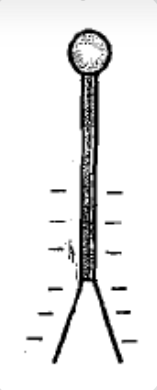
The adjoining figure shows a negatively charged electroscope. If a negatively charged rod is brought close to, but not touching, the knob, the two leaves will:
At breakdown voltage, the rate of creation of hole-electron pairs is _____ leading to the _______ in current. 
If the threshold wavelength for sodium is 5420 Å, then the work function of sodium is(a) 4.58 eV(b) 2.28 eV(c) 1.14 eV(d) 0.23 eV
       
A prism (μ = 1.5) has the refracting angle of 30°. The deviation of a monochromatic ray incident normally on its one surface will be (sin 48° 36’ = 0.75)(a) 18° 36’(b) 20° 30’(c) 18°(d) 22°1’
       
If three bulbs 60W, 100W and 200W are connected in parallel, then(a) 200 W bulb will glow more(b) 60 W bulb will glow more(c) 100 W bulb will glow more(d) All the bulbs will glow equally