MCQ
The determinant $\left| {\,\begin{array}{*{20}{c}}{4 + {x^2}}&{ - 6}&{ - 2}\\{ - 6}&{9 + {x^2}}&3\\{ - 2}&3&{1 + {x^2}}\end{array}\,} \right|$ is not divisible by
  • A
    $x$
  • B
    ${x^3}$
  • C
    $14 + {x^2}$
  • ${x^5}$

Answer

Correct option: D.
${x^5}$
d
(d) $\left| {\,\begin{array}{*{20}{c}}{4 + {x^2}}&{ - 6}&{ - 2}\\{ - 6}&{9 + {x^2}}&3\\{ - 2}&3&{1 + {x^2}}\end{array}} \right| = {x^4}(14 + {x^2})$ $ = x.{x^3}(14 + {x^2})$

Hence, the determinant is divisible by $x$,${x^3}$ and $(14 + {x^2})$,

but not divisible by ${x^5}$.

Need a full question paper?

Generate a complete, print-ready paper with questions like this in minutes — across 16+ boards, with answer keys.
Start Generating Free

Similar questions

If $a,\;b,\;c,\;d$ and $p$ are different real numbers such that $({a^2} + {b^2} + {c^2}){p^2} - 2(ab + bc + cd)p + ({b^2} + {c^2} + {d^2}) \le 0$, then $a,\;b,\;c,\;d$ are in
Let $A$ be a $3 \times 3$ matrix such that $A^T + 2A= I$ then $det\,(A^{-1}) $ is equal to
Let $a, b, c$ and $d$ be non-zero numbers. If the point of intersection of the lines $4ax + 2ay + c = 0$ and $5bx + 2by + d =0$ lies in the fourth quadrant and is equidistant from the two axes then 
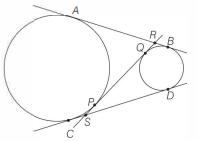
Suppose $S_1$ and $S_2$ are two unequal circles, $A B$ and $C D$ are the direct common tangents to these circles. A transverse common tangent $P Q$ cuts $A B$ in $R$ and $C D$ in $S$. If $A B=10$, then $R S$ is
Let $\vec \alpha \, = \,3\hat i\, + \hat j$ and $\vec \beta \, = \,2\hat i\, - \hat j + 3\hat k.$ If $\vec \beta \, = \,{\vec \beta _1} - {\vec \beta _2},$ where ${\vec \beta _1}$ is parallel to $\vec \alpha $ and $\vec \beta_2 $ is perpendicular to $\vec \alpha ,$  then ${\vec \beta _1} \times {\vec \beta _2}$ is equal to
Let $A=\left\{n \in N \mid n^{2} \leq n+10,000\right\}, B=\{3 k+1 \mid k \in N\}$ and $C=\{2 k \mid k \in N\}$, then the sum of all the elements of the set $A \cap(B-C)$ is equal to $.....$
The integral $\int {\frac{{2{x^3} - 1}}{{{x^4} + x}}} \,dx$ is equal to (Here $C$ is a constant of integration)
$\mathop {Lim}\limits_{x \to {0^ - }} \,{\sin ^{ - 1}}[\tan x]\,$ $= l$ then $\{ l \}$ is equal to

where [ ] and { } denotes greatest integer and fractional part function.

Let $f ( x )=\int \frac{\sqrt{ x }}{(1+ x )^{2}} d x ( x \geq 0) .$ Then $f (3)- f (1)$ is equal to
${d \over {dx}}\log (\sqrt {x - a} + \sqrt {x - b} ) = $