MCQ
The device that can act as a complete electronic circuit is
  • A
    junction diode
  • integrated circuit
  • C
    junction transistor
  • D
    zener diode

Answer

Correct option: B.
integrated circuit
b
The device that can act as a complete circuit is integrated circuit $(IC)$.

Need a full question paper?

Generate a complete, print-ready paper with questions like this in minutes — across 16+ boards, with answer keys.

Start Generating Free

Similar questions

An $HCl$ molecule has rotational, translational and vibrational motions. If the $rms$ velocity of $HCl$ molecules in its gaseous phase is $\bar v ,\,m$ is its mass and $k_B$ is Boltzmann constant, then its temperature will be
A soap bubble is blown to a diameter of $7 \mathrm{~cm}$. $36960 \mathrm{erg}$ of work is done in blowing it further. If surface tension of soap solution is $40 \mathrm{dyne} / \mathrm{cm}$ then the new radius is______. $\mathrm{cm}$. Take $:\left(\pi=\frac{22}{7}\right)$.
In the $R-C$ circuit shown in the figure the total energy of $3.6 \times 10^{-3}\  J$ is dissipated in the $10$ $\Omega$ resistor when the switch $S$ is closed. The initial charge on the capacitor is.....$\mu C$
Starting with a sample of pure $^{66}Cu,\,\frac{7}{8}$ of it decays into $Zn$ in $15\, min$. The corresponding half-life is .......... $min$
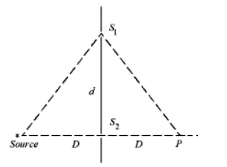
In a double slit experiment shown in figure, when light of wavelength $400 \mathrm{~nm}$ is used, dark fringe is observed at $P$. If $D=0.2 \mathrm{~m}$. the minimum distance between the slits $S_1$ and $S_2$ is ____________$mm$.
A body, which emits radiations of all possible wavelengths, is known as
Which of the following statements is true
A $50\,kg$ man with $20\,kg$ load on his head climbs up $20$ steps of $0.25\,m$ height each. The work done in climbing is......$J$
Identify the correct reagents that would bring about the following transformation.
 A convex lens $'A'$ of focal length $20\, \mathrm{~cm}$ and a concave lens $'B'$ of focal length $5\, \mathrm{~cm}$ are kept along the same axis with a distance $'\mathrm{d}'$ between them. If a parallel beam of light falling on $'A'$ leaves $'B'$ as a parallel beam, then the distance $'d'$ in $cm$ will be :