MCQ
The diamagnetic species is
- A$[Co(H_2O)_6]^{2+}$
- B$[Ni(H_2O)_6)^{2+}$
- ✓$[Co(NH_3)_6]^{3+}$
- D$[Ni(NH_3)_6]^{2+}$
Generate a complete, print-ready paper with questions like this in minutes — across 16+ boards, with answer keys.
Statement $I:$
In Lucas test, primary, secondary and tertiary alcohols are distinguished on the basis of their reactivity with conc. $HCl + ZnCl _{2}$, known as Lucas Reagent.
Statement $II :$
Primary alcohols are most reactive and immediately produce turbidity at room temperature on reaction with Lucas Reagent.
In the light of the above statements, choose the most appropriate answer from the options given below :
|
List $- I$ (Products formed) |
List $- II$ (Reaction of carbonyl compound with) |
| $(a)$ Cyanohydrin | $(i)$ $NH _{2} OH$ |
| $(b)$ Acetal | $(ii)$ $RNH _{2}$ |
| $(c)$ Schiff's base | $(iii)$ alcohol |
| $(d)$ Oxime | $(iv)$ $HCN$ |
Choose the correct answer from the options given below:
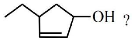
$I :$ The three elements are metals.
$II :$ The electro negativities decrease from $X$ to $Y$ to $Z$.
$III :$ The atomic radius decreases in the order $X, Y$ and $Z.$
$IV : X, Y$ and $Z$ could be phosphorus, aluminium and sodium respectively.