MCQ
The electronic structure of four elements $A, B, C, D$ are
  • A
    $1{s^2}$
  • B
    $1{s^2},\,\,2{s^2}\,2{p^2}$
  • $1{s^2},\,\,2{s^2}\,2{p^5}$
  • D
    $1{s^2},\,\,2{s^2}\,2{p^6}$

Answer

Correct option: C.
$1{s^2},\,\,2{s^2}\,2{p^5}$
(c) Element $C$ has electronic structure $1{s^2},\,\,2{s^2}2{p^5}$, it requires only one electron to complete its octet and it will form anion so it will form electrovalent bond.

Need a full question paper?

Generate a complete, print-ready paper with questions like this in minutes — across 16+ boards, with answer keys.

Start Generating Free

Similar questions

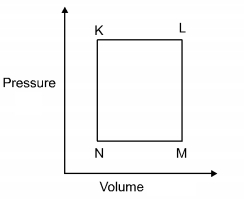
A fixed mass ' $m$ ' of a gas is subjected to transormation of states from $K$ to $L$ to $M$ to $N$ and back to $K$ as shown$Image$

$1.$ The succeeding operations that enable this transformation of states are

$(A)$ Heating, cooling, heating, cooling

$(B)$ Cooling, heating, cooling, heating

$(C)$ Heating, cooling, cooling, heating

$(D)$ Cooling, heating, heating, cooling

$2.$ The pair of isochoric processes among the transormation of states is

$(A)$ $K$ to $L$ and $L$ to $M$

$(B)$ $L$ to $M$ and $N$ to $K$

$(C)$ $L$ to $M$ and $M$ to $N$

$(D)$ $M$ to $N$ and $N$ to $K$

Give the answer question $1$ and $2.$
Increasing order of electron affinity is :-
The number of alkynes possible with molecular formula $C _5 H _8$ is:
Three moles of $B _2 H _6$ are completely reacted with methanol. The number of moles of boron containing product formed is
The charge of an electron is $ - 1.6 \times {10^{ - 19}}C.$ The value of free charge on $L{i^ + }$ ion will be
Rutherford's alpha particle scattering experiment eventually led to the conclusion that
A substance containing an equal number of primary, secondary and tertiary carbon atoms is:
In which of the following species the hybrid state of the central atom is same?
The exhibition of highest co$-$ordination number depends on the availability of vacant orbitals in the central atom. Which of the following elements is not likely to act as central atom in $\text{MF}^{3-}_6$?
The energy of an electron in the ground state $(n=1)$ for $\mathrm{He}^{+}$ion is $-x ~J$, then that for an electron in $n=2$ state for $Be^{3+}$ ion in $J$ is