MCQ
The equation $3\cos x + 4\sin x = 6$ has
  • A
    Finite solution
  • B
    Infinite solution
  • C
    One solution
  • No solution

Answer

Correct option: D.
No solution
d
(d) $3\cos x + 4\sin x = 6$

==> $\frac{3}{5}\cos x + \frac{4}{5}\sin x = \frac{6}{5}$

==> $\cos (x - \theta ) = \frac{6}{5}$,

$[{\rm{where\,\, }}\theta = {\cos ^{ - 1}}(3/5)]$

So, that equation has no solution.

Need a full question paper?

Generate a complete, print-ready paper with questions like this in minutes — across 16+ boards, with answer keys.
Start Generating Free

Similar questions

A stair-case of length $l$ rests against a vertical wall and a floor of a room. Let $P$ be a point on the stair-case, nearer to its end on the wall, that divides its length in the ratio $1 : 2$. If the staircase begins to slide on the floor, then the locus of $P$ is
If the standard deviation of a variable $X$ is $\sigma,$ then the standard deviation of variable $\frac{\text{aX+b}}{\text{c}}$ is:
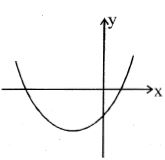
If the graph of $y = ax^2 + bx + c$ $\left( {a,b,c \in R} \right)$ is as follows: $(D = b^2 - 4ac)$  which of the following is incorrect
If ${(1 + x - 2{x^2})^6} = 1 + {a_1}x + {a_2}{x^2} + .... + {a_{12}}{x^{12}}$, then the expression ${a_2} + {a_4} + {a_6} + .... + {a_{12}}$ has the value
A person $X$ is running around a circular track completing one round every $40 s$. Another person $Y$ running in the opposite direction meets $X$ every $15 s$. The time, expressed in seconds, taken by $Y$ to complete one round is
Let $f : R \rightarrow R$ be a function given by $f(x) = x^2 + 1$ then the value of $f^{-1} (26)$ is:
${x^2} + x + 1 + 2k\,({x^2} - x - 1) = 0$is a perfect square for how many values of $k$
$\lim\limits_{\text{x} \rightarrow 0}\frac{|\sin\text{x}|}{\text{x}}$ is equal to:
If $f(x) = 3x^{10} - 7x^8 + 5x^6 - 21x^3 +3x^2 - 7,$ then $\mathop {\lim }\limits_{\alpha  \to 0} \frac{{f(1 - \alpha ) - f(1)}}{{{\alpha ^3} + 3\alpha }}$ is
Let $PQ$ and $RS$ be the tangent at the extremities of the diameter $PR$ of a circle of radius $r$. If $PS$ and $RQ$ intersect at a point $X$ on the circumference of the circle, then $(PQ.RS)$ is equal to