Question
The equation xy = 0 in three dimensional space is represented by:
  1. A plane
  2. Two plane are right angles
  3. A pair of parallel planes
  4. A pair of st. line

Answer

  1. Two plane are right angles

Need a full question paper?

Generate a complete, print-ready paper with questions like this in minutes — across 16+ boards, with answer keys.

Start Generating Free

Similar questions

Choose the correct answers from the given four options:
Let $\text{f(x)}=|\sin\text{x}|.$ Then:
  1. f is everywhere differentiable.
  2. f is everywhere continuous but not differentiable at $\text{x}=\text{n}\pi,\text{n}\in\text{Z}.$
  3. f is everywhere continuous but not differentiable at $\text{x}=(2\text{n}+1)\frac{\pi}{2},\text{n}\in\text{Z}.$
  4. None of these.
The relation $R$ is defined on the set of natural numbers as $\{(a, b) : a = 2b\}$. Then $\{R^{ - 1}\}$ is given by
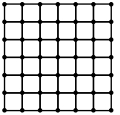
Consider the $6 \times 6$ square in the figure. Let $A_1, \mathrm{~A}_2, \ldots, A_{49}$ be the points of intersections (dots in the picture) in some order. We say that $A_i$ and $A_j$ are friends if they are adjacent along a row or along a column. Assume that each point $A_i$ has an equal chance of being chosen.

(image)

($1$) Let $p_i$ be the probability that a randomly chosen point has $i$ many friends, $i=0,1,2,3,4$. Let $X$ be a random variable such that for $i=0,1,2,3,4$, the probability $P(X=i)=p_i$. Then the value of $7 E(X)$ is

($2$) Two distinct points are chosen randomly out of the points $A_1, A_2, \ldots, A_{4 g}$. Let $p$ be the probability that they are friends. Then the value of $7 p$ is
If $a, b, c$  are mutually perpendicular vectors of equal magnitudes, then the angle between the vectors $a$ and $a + b + c$ is
${\tan ^{ - 1}}\left( {\frac{1}{4}} \right) + {\tan ^{ - 1}}\left( {\frac{2}{9}} \right) = $
If $f(x) = \int_{ - 1}^x {|t|\,dt,} $ $x \ge - 1,$ then
Which of the following statements is incorrect for the function $g(\alpha)$ for $\alpha \in R$ such that

$g(\alpha)=\int_{\frac{\pi}{6}}^{\frac{\pi}{3}} \frac{\sin ^{\alpha} x}{\cos ^{\alpha} x+\sin ^{\alpha} x} d x$

If $f(x)\, = {x^2} - x + 5,\,\,x > \frac{1}{2},$ and $g(x)$ is its inverse function, then $g'(7)$ equals
Let $I_n=\int_0^1 e^{-y} y^n d y$, where $n$ is a non-negative integer. Then, $\sum_{n=1}^{\infty} \frac{I_n}{n !}$ is
On which of the following intervals is the function $f$ given by $f(x)=x^{100}+\sin x-1$ decreasing $?$