MCQ
The extent of ionization increases
- AWith the increase in concentration of solute
- ✓On addition of excess water to solution
- COn decreasing the temperature of solution
- DOn stirring the solution vigorously
Generate a complete, print-ready paper with questions like this in minutes — across 16+ boards, with answer keys.
| List -$I$ Molecule | List - $II$ Shape |
| $(A)$. $\mathrm{BrF}_5$ | $(I)$. $T$-shape |
| $(B)$. $\mathrm{H}_2 \mathrm{O}$ | $(II)$. See saw |
| $(C)$. $\mathrm{ClF}_3$ | $(III)$. Bent |
| $(D)$. $\mathrm{SF}_4$ | $(IV)$. Square pyramidal |
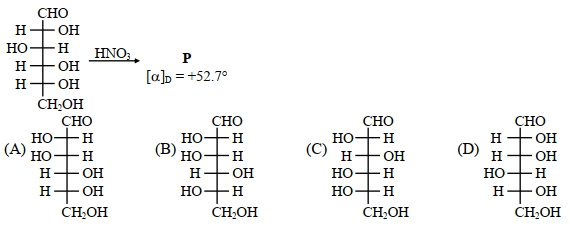
| Name according to IUPAC nomenclature | IUPAC offficial Name |
| (A) Ununoctium | Oganesson |
| (B) Ununnillium | Darmstadtium |
| (C) Unniltrium | Lawrencium |
| (D) Unnilseptium | Dubnium |
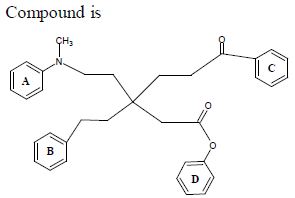
$2 {X}+\mathrm{B}_2 \mathrm{H}_6 \rightarrow\left\lfloor\mathrm{BH}_2(\mathbf{X})_2\right\rfloor^{+}\left\lfloor\mathrm{BH}_4\right]^{-}$ the amine(s) ${X}$ is$(are)$
$(A)$ $\mathrm{NH}_3$ $(B)$ $\mathrm{CH}_3 \mathrm{NH}_2$ $(C)$ $\left(\mathrm{CH}_3\right)_2 \mathrm{NH}$ $(D)$ $\left(\mathrm{CH}_3\right)_3 \mathrm{~N}$