MCQ
The extraction of nickel involves
  • A
    The formation of $Ni{(CO)_4}$
  • B
    The decomposition of $Ni{(CO)_4}$
  • The formation and thermal decomposition of $Ni{(CO)_4}$
  • D
    The formation and catalytic decomposition of $Ni{(CO)_4}$

Answer

Correct option: C.
The formation and thermal decomposition of $Ni{(CO)_4}$
c
(c)The formation and thermal decomposition of $Ni{(CO)_4}$.

Need a full question paper?

Generate a complete, print-ready paper with questions like this in minutes — across 16+ boards, with answer keys.

Start Generating Free

Similar questions

Electrophilic addition on a carbon-carbon double bond involves the intermediate formation of a more stable carbocation. This statement is called
Identify the product $Y$ in the sequence$C{H_3}CHO + C{H_3}Mgl\xrightarrow{{{\text{Ether}}}}X\xrightarrow{{{H_2}O/{H^ + }}}Y$
For octahedral $Mn(II)$ and tetrahedral $Ni(II)$ complexes, consider the following statements :

$(I)$ both the complexes can be high spin

$(II)$ $Ni(II)$ complex can very rarely be low spin.

$(III)$ with strong field ligands, $Mn(II)$ complexes can be low spin.

$(IV)$ aqueous solution of $Mn ( II )$ ions is yellow in color.

Which one of the following alcohol will undergo acid catalysed dehydration with greatest ease by $E_1$ mechanism ?
The difference between bond orders of $\mathrm{CO}$ and $\mathrm{NO}$ is $\mathrm{NO}^{\oplus}$ is $\frac{\mathrm{x}}{2}$ where $\mathrm{x}=.....$

(Round off to the Nearest Integer)

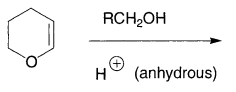
The major product of the following reaction is
Given below are two statements: one is labelled as Assertion $(A)$ and the other is labelled as Reason $(R)$.

Assertion $(A)$ : Haloalkanes react with $\mathrm{KCN}$ to form alkyl cyanides as a main product while with $\mathrm{AgCN}$ form isocyanide as the main product.

Reason $(R)$ : $\mathrm{KCN}$ and $\mathrm{AgCN}$ both are highly ionic compounds.

In the light of the above statement, choose the most appropriate answer from the options given below:

What is major product of following reaction? $\begin{array}{*{20}{c}}
  {O\,\,\,\,\,\,\,\,\,\,\,\,\,\,\,\,\,\,\,\,\,\,\,\,\,\,\,\,\,\,\,\,\,\,\,\,\,} \\ 
  {||\,\,\,\,\,\,\,\,\,\,\,\,\,\,\,\,\,\,\,\,\,\,\,\,\,\,\,\,\,\,\,\,\,\,\,\,\,\,} \\ 
  {{C_2}{H_5} - C - N{H_2}\xrightarrow[{B{r_2}}]{{KOH}}A\xrightarrow[{KOH}]{{CHC{l_3}}}} 
\end{array}$ Major Product
At $25\,^oC$, calculate equilibrium constant for the cell reaction,

${X_{\left( s \right)}} + Y_{\left( {aq} \right)}^{ + 2} \rightleftharpoons {Y_{\left( s \right)}} + X_{\left( {aq} \right)}^{2 + }$

Given : 

$E_{{x^{ + 2}}/x}^o =  - 1.36\,volt$ ;   

$E_{{y^{ + 2}}/y}^o =  - 0.76\,volt\,\frac{{2.303\,RT}}{F} = 0.06$
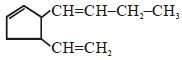
Stereoisomer possible for following compound