MCQ
The factor which is not affecting the conductivity of any solution is
  • A
    Dilution
  • B
    Nature of electrolyte
  • C
    Temperature
  • None of these

Answer

Correct option: D.
None of these
d
(d)Dilution, temperature and nature of electrolyte affect the conductivity of solution.

Need a full question paper?

Generate a complete, print-ready paper with questions like this in minutes — across 16+ boards, with answer keys.

Start Generating Free

Similar questions

Which one is found in $ATP$ ribonucleotide
The position of some metals in the electrochemical series in decreasing electropositive character is given as $Mg > Al > Zn > Cu > Ag.$ What will happen, if a copper spoon is used to stir a solution of aluminium nitrate
The correct sequence of polarity of the following molecule
$(1)$ Benzene           $(2)$ Inorganic Benzene
$(3)\, PCl_3F_2$        $(4)\, PCl_2F_3$

$1\,\,\,$-$\,\,\,2\,\,\,$-$\,\,\,3\,\,\,$-$\,\,\,4$

(Where. $P =$ polar, $NP =$ non-polar)
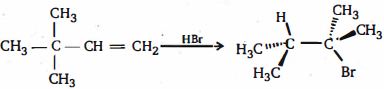
Consider the addition of $HBr$ to $3,3$ -Dimethyl- $1$ -butene shown below. What is  the best mechanistic explanation for the formation of the observed product ?
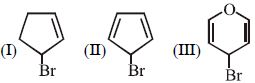
Among the bromides $I-III$ given below ; the order of reactivity ${S_N}^1$ reaction is
Which reaction is incorrectly written
The values of the crystal field stabilization energies for a high spin $d ^{6}$ metal ion in octahedral and tetrahedral fields, respectively, are :
Given below are two statements: One is labelled as Assertion ($A$) and the other is labelled as Reason ($R$)

Assertion ($A$): Enthalpy of neutralisation of strong monobasic acid with strong monoacidic base is always $-57 \mathrm{~kJ} \mathrm{~mol}^{-1}$

Reason ($R$): Enthalpy of neutralisation is the amount of heat liberated when one mole of $\mathrm{H}^{+}$ions furnished by acid combine with one mole of ${ }^{-} \mathrm{OH}$ ions furnished by base to form one mole of water. In the light of the above statements, choose the correct answer from the options given below.

Which of the following is incorrectly matched ?

(Formation of)        (Best synthesis by)

Which of the following compound is the strongest base