MCQ
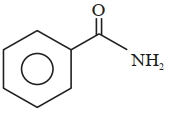
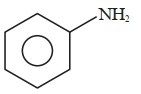
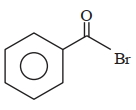
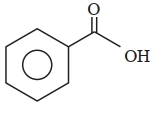
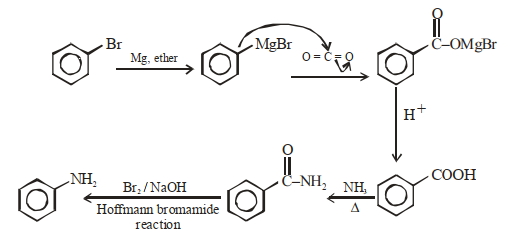
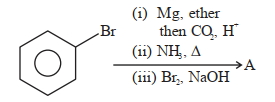
The final product $\mathrm{A}$, formed in the following multistep reaction sequence is: 
  • A


  • C

  • D

Answer

Correct option: B.

b

Need a full question paper?

Generate a complete, print-ready paper with questions like this in minutes — across 16+ boards, with answer keys.

Start Generating Free

Similar questions

A current of $0.25\,A$ is passed through $CuS{O_4}$ solution placed in voltameter for $45 $ minutes. The amount of $Cu$  deposited on cathode is ............. $\mathrm{g}$ (At weight of $Cu = 63.6$)
Nitrobenzene on reduction by zinc and $N{H_4}Cl$ gives
Ethylene reacts with bromine to form
In the given reactions sequence, the major product $'C'$ is ..... .
$\mathrm{RCONH}_2$ is converted into $\mathrm{RNH}_2$ by means of Hofmann bromamide degradation.

$Image$

In this reaction, $\mathrm{RCONHBr}$ is formed from which this reaction has derived its name. Electron donating group at phenyl activates the reaction. Hofmann degradation reaction is an intramolecular reaction.

$1.$  How can the conversion of $(i)$ to $(ii)$ be brought about?

$(A)$ $\mathrm{KBr}$  $(B)$ $\mathrm{KBr}+\mathrm{CH}_3 \mathrm{ONa}$  $(C)$ $\mathrm{KBr}+\mathrm{KOH}$  $(D)$ $\mathrm{Br}_2+\mathrm{KOH}$

$2.$  Which is the rate determining step in Hofmann bromamide degradation?

$(A)$ Formation of $(i)$  $(B)$ Formation of $(ii)$  $(C)$ Formation of $(iii)$  $(D)$ Formation of $(iv)$

$3.$  What are the constituent amines formed when the mixture of $(i)$ and $(ii)$ undergoes Hofmann bromamide degradation?

$Image$

give the answer question $1$, $2$, and $3.$

The reaction speed rule is given $\frac{d P}{d t}=K[A][B]$ for $2 A+ B \longrightarrow$ Product $( P )$ when $[ B ] \gg[ A ]$, then order of reaction is this situation will be :
When $KMn{O_4}$ is reduced with oxalic acid in acidic solution, the oxidation number of $Mn$ changes from
The molality of a solution is
Anisole $\frac{excess\, HI \,(conc.)}{reflux}$ Product
The proper name for ${K_2}{[PtCl_6]}$ is