MCQ
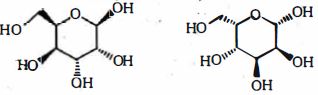
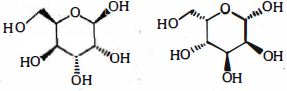
The following compounds differ in respect of 
  • A
    their chemical and physical properties
  • B
    nothing
  • the direction in which they rotate plane of polarized light
  • D
    their interactions with molecules

Answer

Correct option: C.
the direction in which they rotate plane of polarized light
c
Above $2$ compounds are mirror image of each other and are not superimposable  so are  enantiomers and behave differently towards $P.P.L.$

Need a full question paper?

Generate a complete, print-ready paper with questions like this in minutes — across 16+ boards, with answer keys.

Start Generating Free

Similar questions

For a first order reaction, $A\to  P$, $t_{1/2}$ (half-life) is$10\,days$. The time required for $\frac{{{1^{th}}}}{4}$ conversion of $A$ (in days) is: $(\ln\, 2\, = 0.693,\, \ln\, 3\, = 1.1)$.
Match list $-I$ with list $-II$ and then select the correct answer from the codes given below that list

                                  List $-I$

$(A){\mkern 1mu} {\mkern 1mu} {\mkern 1mu} {C_6}{H_6} + CO + HCl\,\xrightarrow{{AlC{l_3}}}\,{C_6}{H_5}CHO$

$(B){\mkern 1mu} {\mkern 1mu} {\mkern 1mu} {C_6}{H_5} + C{H_3}$ $\xrightarrow{{Cr{O_2}C{l_2}}}\,{C_6}{H_5}CHO$

$(C){\mkern 1mu} {\mkern 1mu} {\mkern 1mu} {C_6}{H_5}C{H_2}Br\, + \,C{H_3}Br$ $\xrightarrow{{Na/ether}}\,{C_6}{H_5}C{H_2}C{H_3}$

$(D){\mkern 1mu} {\mkern 1mu} {\mkern 1mu} {C_6}{H_6}\, + \,{(C{H_3})_2}C = C{H_2}$ $\xrightarrow{{{H_2}S{O_4}}}\,{C_6}{H_5}C{(C{H_3})_3}$

                                 List $-II$
$(a)$   Friedel-Crafts reaction
$(b)$   Wurtz-Fitting reaction
$(c)$   Gattermann-Koch Aldehyde synthesis
$(d)$   Etard’s reaction

Identify conformer of $2-$ methyl pentane
The molecular formula of pyro sulphuric acid is
Which of the following molecules is expected to rotate the plane of plane-polarised light ?
Paramagnetism is not exhibited by
  $R - C{H_2} - CC{l_2} - R \xrightarrow{{{\text{Reagent}}}}R - C \equiv C - R$ The reagent is
The major product formed in the following reaction is
If $80\, \mathrm{~g}$ of copper sulphate $\mathrm{CuSO}_{4} \cdot{ } {5 \mathrm{H}_{2} \mathrm{O}}$ is dissolved in deionised water to make $5 \,\mathrm{~L}$ of solution. The concentration of the copper sulphate solution is $\mathrm{x} \times 10^{-3}\, \mathrm{~mol}\, \mathrm{~L}^{-1} .$ The value of $\mathrm{x}$ is .... .

[Atomic masses $\mathrm{Cu}: 63.54\, \mathrm{u}, \mathrm{S}: 32\, \mathrm{u}, \mathrm{O}: 16 \,\mathrm{u}, \mathrm{H}: 1\, \mathrm{u}]$

Which one of the following nitro-compounds does not react with nitrous acid ?