MCQ
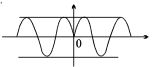
The function $f(x) = sgnx\,\cdot \,sinx$ is
  • A
    discontinuous no where.
  • B
    an even function
  • C
    aperiodic
  • All of the above

Answer

Correct option: D.
All of the above
d
$f (x) =$ $\left[ {\begin{array}{*{20}{c}}  {} \\   {} \end{array}} \right.$ $\begin{array}{*{20}{c}}  {\sin x\,\,\,x \geqslant 0} \\   { - \sin x\,\,\,x\, < 0} \end{array}$

Need a full question paper?

Generate a complete, print-ready paper with questions like this in minutes — across 16+ boards, with answer keys.

Start Generating Free

Similar questions

The positive value of the determinant of the matrix $A$, whose $A d j(A d j(A))=\left(\begin{array}{ccc}14 & 28 & -14 \\ -14 & 14 & 28 \\ 28 & -14 & 14\end{array}\right)$, is
There are three bags $B_1, B_2$ and $B_3$. The bag $B_1$ contains $5$ red and $5$ green balls, $B_2$ contains $3$ red and 5 green balls, and $B_3$ contains $5$ red and $3$ green balls, Bags $B_1, B_2$ and $B_3$ have probabilities $\frac{3}{10}, \frac{3}{10}$ and $\frac{4}{10}$ respectively of being chosen. A bag is selected at random and a ball is chosen at random from the bag. Then which of the following options is/are correct?

$(1)$ Probability that the selected bag is $B _3$ and the chosen ball is green equals $\frac{3}{10}$

$(2)$ Probability that the chosen ball is green equals $\frac{39}{80}$

$(3)$ Probability that the chosen ball is green, given that the selected bag is $B_3$, equals $\frac{3}{8}$

$(4)$ Probability that the selected bag is $B_3$, given that the chosen balls is green, equals $\frac{5}{13}$

If the mean and variance of a binomial variate $X$ are $2$ and $1$ respectively, then the probability that $X$ takes a value greater than $1$ is :
Let $f(x)=x^5+2 x^3+3 x+1, x \in R$, and $g(x)$ be a function such that $g(f(x))=x$ for all $x \in R$. Then $\frac{g(7)}{g^{\prime}(7)}$ is equal to :
The number of real roots of the equation $e^{6 x}-e^{4 x}-2 e^{3 x}-12 e^{2 x}+e^{x}+1=0$ is:
If ${\Delta _1} = \left| {\begin{array}{*{20}{c}}
  x&{\sin \,\theta }&{\cos \,\theta } \\ 
  {\sin \,\theta }&{ - x}&1 \\ 
  {\cos \,\theta }&1&x 
\end{array}} \right|$ and ${\Delta _1} = \left| {\begin{array}{*{20}{c}}
  x&{\sin \,2\theta }&{\cos \,\,2\theta } \\ 
  {\sin \,2\theta }&{ - x}&1 \\ 
  {\cos \,\,2\theta }&1&x 
\end{array}} \right|$, $x \ne 0$ ; then for all $\theta  \in \left( {0,\frac{\pi }{2}} \right)$
If $A = \left[ {\begin{array}{*{20}{c}}1&0&1\\2&1&0\\3&2&1\end{array}} \right],$then $\det A$=
Choose the correct answer from the given four options. The maximum number of equivalence relations on the set $A = {1, 2, 3}$ are:
Let $M$  and  $m$  be respectively the local maximum and the local minimum values of the function, $f(x) = \,2{x^3} - 9{x^2} + 12x + 5$  in the interval $[0, 3].$  Then $M-m$  is equal to
$\int_{}^{} {{{\sin }^2}x\cos x\;dx} $ is equal to