MCQ
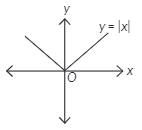
The function $f(x)=|x|$ is
- Acontinuous and differentiable everywhere.
- Bcontinuous and differentiable nowhere.
- Ccontinuous everywhere, but differentiable everywhere except at $x=0$.
- Dcontinuous everywhere, but differentiable nowhere.
Generate a complete, print-ready paper with questions like this in minutes — across 16+ boards, with answer keys.
$\vec{a}=3 \hat{i}+\hat{j}-\hat{k},$
$\vec{b}=\hat{i}+b_2 \hat{j}+b_3 \hat{k}, b_2, b_3 \in R ,$
$\vec{c}=c_1 \hat{i}+c_2 \hat{j}+c_3 \hat{k}, c_1, c_2, c_3 \in R$
be three vectors such that $b_2 b_3>0, \vec{a} \cdot \vec{b}=0$ and
$\left(\begin{array}{ccc}0 & -c_3 & c_2 \\ c_3 & 0 & -c_1 \\ -c_2 & c_1 & 0\end{array}\right)\left(\begin{array}{l}1 \\ b_2 \\ b_3\end{array}\right)=\left(\begin{array}{c}3-c_1 \\ 1-c_2 \\ -1-c_3\end{array}\right)$.
Then, which of the following is/are TRUE?
$(A)$ $\overrightarrow{ a } \cdot \overrightarrow{ c }=0$
$(B)$ $\vec{b} \cdot \vec{c}=0$
$(C)$ $|\vec{b}|>\sqrt{10}$
$(D)$ $|\vec{c}| \leq \sqrt{11}$
$f(0)=g(0)=0$
$\Psi_1( x )= e ^{- x }+ x , \quad x \geq 0$
$\Psi_2( x )= x ^2-2 x -2 e ^{- x }+2, x \geq 0$
$f( x )=\int_{- x }^{ x }\left(| t |- t ^2\right) e ^{- t ^2} dt , x >0$
and
$g(x)=\int_0^{x^2} \sqrt{t} e^{-t} d t, x>0$
($1$) Which of the following statements is $TRUE$ ?
$(A)$ $f(\sqrt{\ln 3})+ g (\sqrt{\ln 3})=\frac{1}{3}$
$(B)$ For every $x>1$, there exists an $\alpha \in(1, x)$ such that $\psi_1(x)=1+\alpha x$
$(C)$ For every $x>0$, there exists a $\beta \in(0, x)$ such that $\psi_2(x)=2 x\left(\psi_1(\beta)-1\right)$
$(D)$ $f$ is an increasing function on the interval $\left[0, \frac{3}{2}\right]$
($2$) Which of the following statements is $TRUE$ ?
$(A)$ $\psi_1$ (x) $\leq 1$, for all $x>0$
$(B)$ $\psi_2(x) \leq 0$, for all $x>0$
$(C)$ $f( x ) \geq 1- e ^{- x ^2}-\frac{2}{3} x ^3+\frac{2}{5} x ^5$, for all $x \in\left(0, \frac{1}{2}\right)$
$(D)$ $g(x) \leq \frac{2}{3} x^3-\frac{2}{5} x^5+\frac{1}{7} x^7$, for all $x \in\left(0, \frac{1}{2}\right)$