MCQ
The functional group present in organic acid is:
- A−OH
- B−CHO
- C−COOH
- D> C = O
Explanation:
The functional group present every organic acid is −COOH as it dissociate in water as −COO− and H+.
Generate a complete, print-ready paper with questions like this in minutes — across 16+ boards, with answer keys.
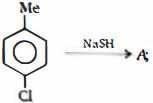
End product of the reaction is
${A_2}B(g) \to {A_2}(g) + B(g);\,\,\,\Delta {H^o} = 40\,kJ/mol$
${A_2}B(g) \to A(g) + AB(g);\,\,\,\Delta {H^o} = 50\,kJ/mol$
.....$ kJ/mol$

${\Delta _r}{G^o}$ (in $kJ\,mol^{-1}$) $=120-\frac {3}{8}\,T$
The major component of the reaction mixture at $T$ is
$A.$ The electron gain enthalpy of $F$ is more negative than that of $Cl$
$B.$ Ionization enthalpy decreases in a group of periodic table
$C.$ The electronegativity of an atom depends upon the atoms bonded to it.
$D.$ $Al _2 O _3$ and $NO$ are examples of amphoteric oxides.
Choose the most appropriate answer from the options given below: