MCQ
The genetic map distance between two genes located on the same chromosome can be analyzed by calculating ____________.
  • A
    the diameter of the particular chromosome
  • B
    the number of nucleotides in the particular chromosome
  • the percentage of crossing over or recombinant frequency between the two genes
  • D
    the number of constrictions present in the particular chromosome
Answer

Correct option: C.
the percentage of crossing over or recombinant frequency between the two genes
C

Need a full question paper?

Generate a complete, print-ready paper with questions like this in minutes — across 16+ boards, with answer keys.

Start Generating Free

Similar questions

Select the correct match from the following.
If y = `sqrt("e"^x + sqrt("e"^x + sqrt("e"^x + .... oo)`, then `("d"y)/("d"x)` is equal to ______.
In a damped oscillatory motion, if 'T' is its time period and 'A' is its amplitude, then damping ______.
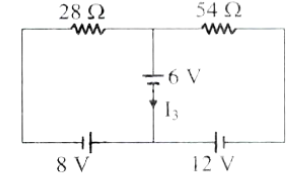
Consider the circuit shown in the figure. The current $I_3$ is equal to ____________.
Image
A body of mass 'm' begins to move under the action of time-dependent force $\overrightarrow{ F }=\left( t \hat{ i }+2 t ^2 \hat{ j }\right) N$ where $\hat{ i }$ and $\hat{ j }$ are unit vectors along x and y axis respectively. The power developed by the force in watt at time 't' is ______.
Match the enzymes with their respective substrates and choose the correct option.
Column I Column II
i. pancreatic lipase a. Dipeptides
ii. Nucleases b. Fats
iii. Lactase c. Nucleic acids
iv. Dipeptidases d. Lactose
The moment of inertia of a body initially at rest about a given axis is $1.2 \ kg m^2.$ On applying an acceleration of $25 \ rad/s^2,$ the time it will take to acquire a rotational kinetic energy of $1500 J$ is $.........$
Which of the following was used by Hershey and Chase to provide the unambiguous proof that DNA is the genetic material?
In $2$ hours, a certain current liberates $0.504 g$ hydrogen. How many grams of copper can be deposited by the same current flowing for the same time in a $CuSO_4$ solution? $($Molar mass of $Cu = 63.5 \ g mol^{−1}, H_2 = 2.0 \ g mol^{−1})$
If $x+i y={ }^` 5 /\left(3+\right.$ costheta + isintheta); , then $x^2+y^2$ is equal to ______