MCQ
The incorrect order is
- ACovalent character : $PbCl_2 > CaCl_2 > SrCl_2 > BaCl_2$
- ✓Thermal stability : $PbF_4 > PbCl_4 > PbBr_4 > Pbl_4$
- CMelting point : $KF > KC l > KBr > KI$
- DBoiling point : $CHCl_3 > CH_3Cl> CCl_4$
$O _3$ can acts as only oxidizing agent due to its unstable nature and decomposes to give nascent oxygen.
$HNO _3$ : Nitrogen is present in its highest oxidation state i.e., $+5$ so it can act as only oxidizing agent.
$SO _2$ :Sulphur is present in $+4$ oxidation state so it can act as both oxidizing as well as reducing agent.
Generate a complete, print-ready paper with questions like this in minutes — across 16+ boards, with answer keys.
$\begin{array}{*{20}{c}}
{C{H_3} - C = CH - C{H_2} - COOH} \\
{|\,\,\,\,\,\,\,\,\,\,\,\,\,\,\,\,\,\,\,\,\,\,\,\,\,\,\,\,\,\,\,\,\,\,\,\,\,\,\,\,\,} \\
{OH\,\,\,\,\,\,\,\,\,\,\,\,\,\,\,\,\,\,\,\,\,\,\,\,\,\,\,\,\,\,\,\,\,\,\,\,\,\,}
\end{array}$
$(a)$ Diborane is prepared by the oxidation of $\mathrm{NaBH}_{4}$ with $\mathrm{I}_{2}$.
$(b)$ Each boron atom is in sp $^{2}$ hybridized state.
$(c)$ Diborane has one bridged $3$ centre$-2-$electron bond.
$(d)$ Diborane is a planar molecule.
The option with correct statement(s) is :
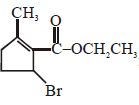
$\underset{A}{\mathop{PhF}}\,\,\,\,\,\,\,\,\,\,\,\,\,\,\,\,\,\underset{B}{\mathop{PhCl}}\,\,\,\,\,\,\,\,\,\,\,\,\,\,\,\,\,\,\,\underset{C}{\mathop{PhBr}}\,\,\,\,\,\,\,\,\,\,\,\,\,\,\,\underset{D}{\mathop{PhI}}\,$
Assertion $(A) :$ At $10^{\circ} C$, the density of a $5\, M$ solution of $KCl$ [atomic masses of $K$ and $Cl$ are $39$ and $35.5\, g \,mol ^{-1}$ ]. The solution is cooled to $-21^{\circ} C$. The molality of the solution will remain unchanged.
Reason $(R):$ The molality of a solution does not change with temperature as mass remains unaffected with temperature.
In the light of the above statements, choose the correct answer from the options given below