Question
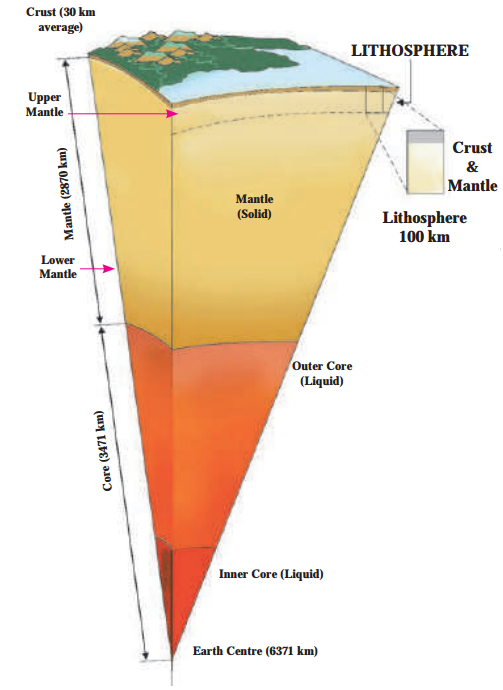
The interior of the earth
Answer


Image

Explanation:

  1. Inner Core: It is the center and the hottest layer of the Earth. The inner core is solid and made up of iron and nickel.
  2. Outer Core: The outer core of the Earth is similar to a very hot ball of metals. It is composed of metals such as iron and nickel. The outer core surrounds the inner core.
  3. Mantle: Mantle is the widest section of the Earth. Mantle is mainly made up of semi-molten rock known as magma. The rock is hard in the upper part of the mantle, but lower down the rock is softer and begins to melt. The mantle consists of very hot and dense rock.
  4. Crust: The crust is the outer layer where we live. It’s a solid rock layer divided into two types: Continental crust covers the land and Oceanic crust covers water.

Need a full question paper?

Generate a complete, print-ready paper with questions like this in minutes — across 16+ boards, with answer keys.
Start Generating Free

Similar questions


Image
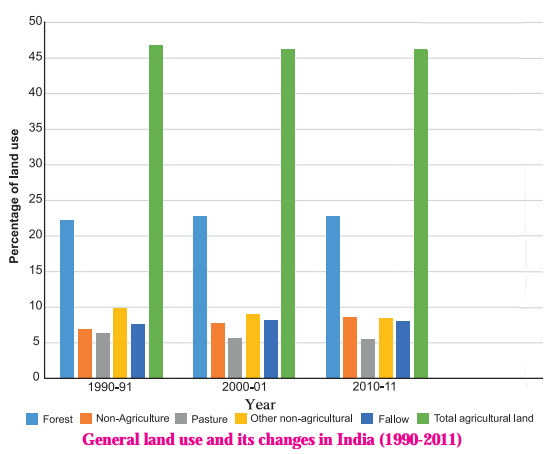
(1) Which are the land uses of 1990-91 that show decline in 2010-11? What could be reasons for this?
(2) Which type of land use is the maximum? What would be the impact of this on India’s environment?
(3) Can a decline in the area under agriculture equated with food shortage?
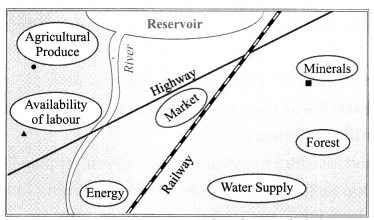
Study the following figure showing the factors affecting the location of an industry. Taking into account the factors shown in the figure, note in different colours the favourable factors required for (1) Iron and steel (2) Textiles and (3) Sugar industry and answer the following questions:
Image
(1) For each industry, prepare a list of necessary factors.
(2) For each industry give an explanation for the location suggested by you.
(3) In a similar manner for which other industries can you decide a suitable location?
Magnetic pole and equator

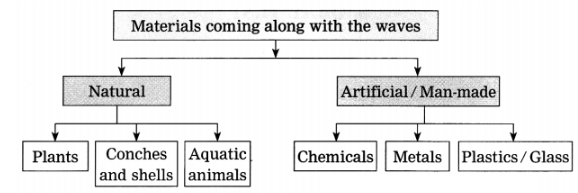
Do this activity when you go to the seashore with your parents or teachers. Observe the materials which have come with the waves. Classify them as per the flowchart given below:Image
(1) What will happen because of non-perishable items?
(2) Suggest measures to control deposition of non-perishable items on the coast.
(3) How will you run a campaign of environmental conservation to keep the coasts clean?

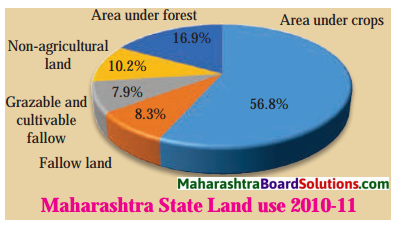
Image

(1) What is the percentage of land suitable for cultivation?
(2) What is the percentage of barren land?
(3) What is the percentage of land under forest in Maharashtra?
(4) What is the percentage of non- agricultural land in Maharashtra?

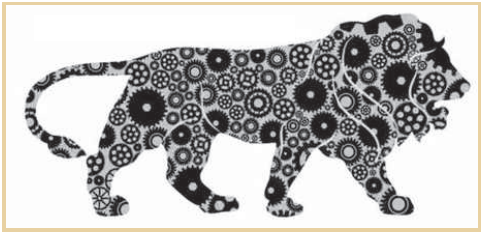
Image

(1) In what context is this logo?
(2) What will be the benefit of this programme?
(3) What is correlation between this programme and employment?
(4) Which are the Navratna industries in India?
(5) Why do you think they have been accorded this status of Navratna?
Imagine about the earth’s interior and- write 10-12 sentences on it.
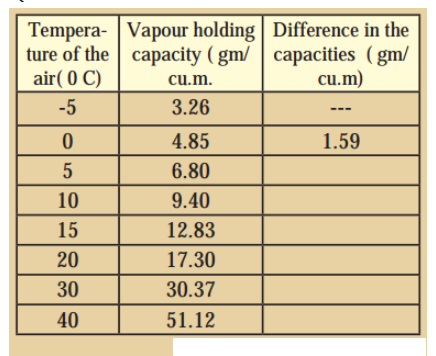
The vapour-holding capacity of 1 cu.m, of air in various temperature is given in the following table.

Calculate the difference in the capacities by observing the following table :
(Note: The answer is given directly.)
Image


Image
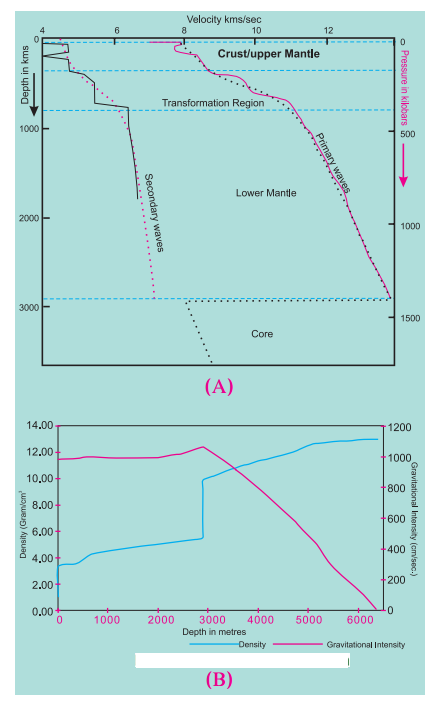
1) At what depth does the curve of the secondary waves seem to have ended in figure (A)?
2) What is the velocity of the secondary waves around the boundary of the outer core shown in figure (A)?
3) What conclusion can be drawn on the basis of the curve of the secondary waves stopping around the depth of 2900 km?
4) What is the velocity of the primary waves at the time of entering the outer core shown in figure (A)?
5) What conclusions can be drawn about the intensity of the gravitational force shown in Figure (B)?

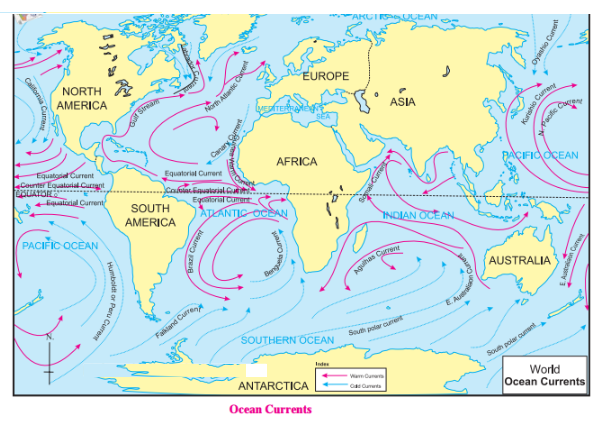
Image
(1) How does the Humboldt current affect the climate of the South America?
(2) In which oceans are counter equatorial currents not observed and why?
(3) Which currents are absent in the northern part of the Indian Ocean and why?
(4) In which regions do the cold and warm ocean currents meet?