MCQ
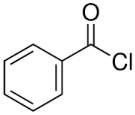
The $IUPAC$ name of $C_6 H_5COCl$ is
- ABenzene carbonyl chloride
- BBenzene chloro ketone
- ✓Benzoyl Chloride
- DChloro phenyl ketone
Generate a complete, print-ready paper with questions like this in minutes — across 16+ boards, with answer keys.
$(II)\,\,\,{{H}_{2}}C=CH-C{{H}_{2}}-\overset{+}{\mathop{C}}\,H-C{{H}_{3}}$
$(III)\,\,\,\begin{matrix}
\,\,\,\,\,C{{H}_{3}}\, \\
|\, \\
{{H}_{3}}C-C-\overset{+}{\mathop{C}}\,{{H}_{2}} \\
|\, \\
\,\,\,C{{H}_{3}} \\
\end{matrix}$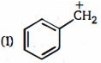
$NH_3{_{(g)}}\ \rightleftharpoons \ \frac {1}{2} {N_2}_{(g)} + \frac {3}{2} {H_2}_{(g)}$ ; $K_P$
The degree of dissociation $(\alpha )$ of $NH_3$ is related to total equilibrium pressure $(P^o )$ as
$(A)$ $0.01 \,M\, HCl$
$(B)$ $0.01 \,M \,NaOH$
$(C)$ $0.01 \,M \,CH _{3} COONa$
$(D)$ $0.01 \,M \,NaCl$
$6CO_2 + 6H_2O + solar energy \to C_6H_{12}O_6+6O_2$
A blue whales gain $75\ kg$ of mass per day by feeding on krill. The whale must consume ten times this mass of krill each day. The krill must consume $10.0\ kg$ of diatoms to produce $1.0\ kg$ of krill. Assuming that the mass gain of a whale's life is due to the consumption of carbohydrates $(C_6H_{12}O_6)$ , calculate the moles of $CO_2$ that must be used by the diatoms to produce the carbohydrates consumed by a blue whale in a day
[At. no. of $Mn = 25 ]$