MCQ
The magnetic susceptibility for diamagnetic materials is:
- ASmall and negative.
- BSmall and positive.
- CLarge and positive.
- DLarge and negative.
Generate a complete, print-ready paper with questions like this in minutes — across 16+ boards, with answer keys.
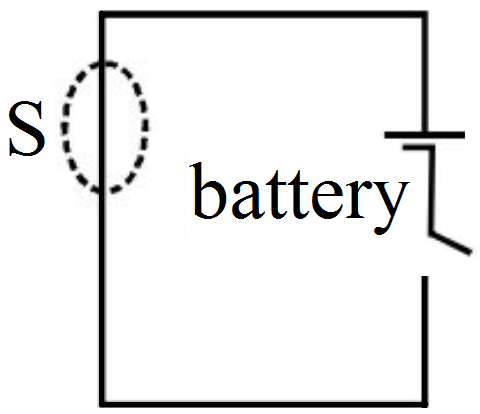
Two unlike charges of magnitude q are separated by a distance 2d. The potential at a point midway between them is
|
(a) Zero |
(b) |
(c) |
(d) |
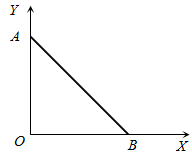
As per this diagram a point charge +q is placed at the origin O. Work done in taking another point charge -Q from the point A [co-ordinates (0, a) ] to another point B [co-ordinates (a, 0)] along the straight path AB is
|
(a) Zero |
(b) |
(c) |
(d) |
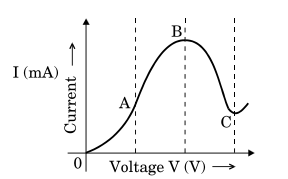
A charged particle moving in a magnetic field experiences a resultant force
|
(a) In the direction of field |
|
(b) In the direction opposite to that field |
|
(c) In the direction perpendicular to both the field and its velocity |
|
(d) None of the above |
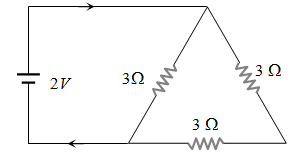
The current in the following circuit is
|
(a) |
(b) |
(c) |
(d) 1A |
For a thermocouple, the neutral temperature is 270℃ and the temperature of its cold junction is 20℃. If there is no deflection in the galvanometer, the temperature of the hot junction should be
|
(a) 210 ℃ |
(b) 540 ℃ |
(c) 520 ℃ |
(d) 209 ℃ |
Potential gradient is defined as
|
(a) Fall of potential per unit length of the wire |
|
(b) Fall of potential per unit area of the wire |
|
(b) Fall of potential per unit area of the wire |
|
(d) Potential at any one end of the wire |


