MCQ
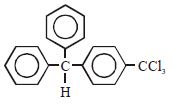
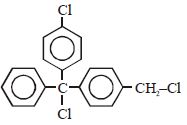
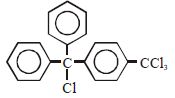
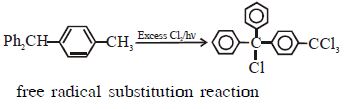
The main product will be

  • A

  • B


  • D
    None of these

Answer

Correct option: C.

c

Need a full question paper?

Generate a complete, print-ready paper with questions like this in minutes — across 16+ boards, with answer keys.

Start Generating Free

Similar questions

The Henry's law constant for the solubility of $N_2$ gas in water at $298\, K$ is $1.0\times10^5\, atm$. The mole fraction of $N_2$ in air is $0.8$. The number of moles of $N_2$ from air dissolved in $10$ moles of water at $298\, K$ and $5\, atm$ pressure is
The number of carbon atoms present in a molecule of simple ether is:
An example of secondary alkyl halide is :
Bromine is commercially prepared from sea water by displacement reaction

$Cl_2 + 2Br^ - (aq.) \to 2Cl^-(aq.) + Br_2$

$Br_2$ gas thus formed is dissolved into solution of $Na_2CO_3$ and then pure $Br_2$ is obtained by treatment of the solution with

Which of the following, is the product of the reaction between $AlCl_3$ and $CH_3OCH_3$ ?
Number of compounds among the following which contain sulphur as heteroatom is

Furan, Thiophene, Pyridine, Pyrrole, Cysteine, Tyrosine
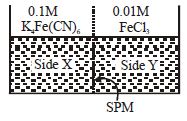
$FeCl_3$ on reaction with $K_4[Fe(CN)_6]$ in aqueous solution gives blue colour. These are separated by a semipermeable membrane $AB$ as shown. Due to osmosis there is
Arrange the following in order of their reactivity toward decarboxylation reaction

$\mathop {\begin{array}{*{20}{c}}
{\,\,\,\,\,\,\,\,\,\,\,\,\,\,O}\\
{\,\,\,\,\,\,\,\,\,\,\,\,\,\,||}\\
{CH \equiv C - C - OH}
\end{array}}\limits_{\rm{I}} $ $\mathop {\begin{array}{*{20}{c}}
{\,\,\,\,\,\,\,\,\,\,\,\,\,\,\,\,\,\,\,O}\\
{\,\,\,\,\,\,\,\,\,\,\,\,\,\,\,\,\,\,\,||}\\
{C{H_2} = CH - C - OH}
\end{array}}\limits_{{\rm{II}}} $ $\mathop {\begin{array}{*{20}{c}}
{\,\,\,\,\,\,\,\,\,\,\,\,\,\,\,\,\,\,\,O}\\
{\,\,\,\,\,\,\,\,\,\,\,\,\,\,\,\,\,\,\,||}\\
{C{H_3} - C{H_2} - C - OH}
\end{array}}\limits_{{\rm{III}}} $$\mathop {\begin{array}{*{20}{c}}
\,\,\,{C{H_3}\,\,\,\,\,\,O}\\
\,\,\,{|\,\,\,\,\,\,\,\,\,\,\,\,\,\,\,||}\\
{C{H_3} - CH - C - OH}
\end{array}}\limits_{{\rm{IV}}} $

Ethanoic acid on heating with ammonia forms compound $A$ which on treatment with bromine and sodium hydroxide gives compound $B$. Compound $B$ on treatment with $NaNO_2$ /dil. $HCl$ gives compound $C$. The compounds $A,\,B$ and $C$ respectively are
Which of the following condition is used to find atomic $C{l_2}$ from molecular $C{l_2}$