MCQ
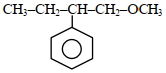
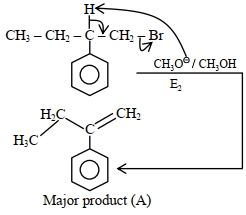
The major product $(A)$ formed in the reaction given below is:
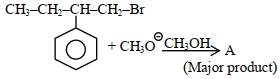
- A
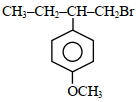
- ✓
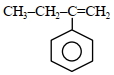
- C
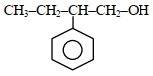
- D
Generate a complete, print-ready paper with questions like this in minutes — across 16+ boards, with answer keys.
(nearest integer)
[Given : Molar mass of $\mathrm{AB}_2=200 \mathrm{~g} \mathrm{~mol}^{-1} \cdot \mathrm{K}_{\mathrm{b}}$
(molal boiling point elevation const. of water)
$=0.52 \mathrm{~K} \mathrm{~kg} \mathrm{~mol}^{-1}$, boiling point of water $=100^{\circ} \mathrm{C}$;
$\mathrm{AB}_2$ ionises as $\left.\mathrm{AB}_2 \rightarrow \mathrm{A}^{2+}+2 \mathrm{~B}^{-}\right]$
$\begin{array}{*{20}{c}}
{C{H_3}CH = C{H_2} + {H_2}O\overset {{H^ + }} \longleftrightarrow C{H_3} - CH - C{H_3}} \\
{\,\,\,\,\,\,\,\,\,\,\,\,\,\,\,\,\,\,\,\,\,\,\,\,\,\,\,\,\,\,\,\,\,\,\,\,\,\,\,\,\,\,\,\,\,\,\,\,\,\,\,\,\,\,\,\,\,\,\,\,\,\,\,\,\,\,\,\,\,|} \\
{\,\,\,\,\,\,\,\,\,\,\,\,\,\,\,\,\,\,\,\,\,\,\,\,\,\,\,\,\,\,\,\,\,\,\,\,\,\,\,\,\,\,\,\,\,\,\,\,\,\,\,\,\,\,\,\,\,\,\,\,\,\,\,\,\,\,\,\,\,\,\,\,\,\,\,OH}
\end{array}$
The reaction takes place in accordance with