MCQ
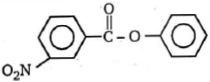
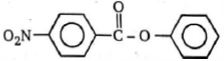
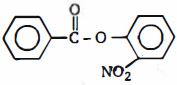
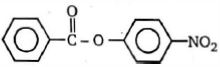
The major product formed in the reaction is
  • A

  • B

  • C


Answer

Correct option: D.

d

Need a full question paper?

Generate a complete, print-ready paper with questions like this in minutes — across 16+ boards, with answer keys.

Start Generating Free

Similar questions

$C{H_3} - C{H_2} - Cl $  $ \xrightarrow{alcKOH} $ $A$, the product is
$A [M(H_2O)_6]^{2+}$ complex typically absorbs at around $600\, nm$. It is  allowed to react with ammonia to form a new complex $[M(NH_3)_6]^{2+}$ that  should have absorption at ....... $nm$
Select reaction with incorrect name
For the process
$A(g) + e^-\to  A^-(g);$                   $\Delta H = x$
and $A^-(g) \to A(g) + e^-$              $\Delta H = y$
Select correct alternate :
Which of the following is low boiling azeotropic mixture
Elevation in the boiling point for $1$ molal solution of glucose is $2\, K$. The depression in the freezing point for $2$ molal solution of glucose in the same solvent is $2\, K$. The relation between $K_b$ and $K_f$ is 
Which of the following compounds will evolve hydrogen on treatment with metal
From the given set of species, point out the species from each set having least atomic radius 

$(A)\, F^-, Na^+, Mg^{+2}$              $(B) \,Ni, Cu, Zn$
$(C)\, N^{-3}, Cs^+, H^-$                $(D)\, Li, He, Be^{+2}$

Larger number of oxidation states are exhibited by the actinoides than those by the lanthanoids, the main reason being
Given
$
\begin{array}{l}
C_{\text {graphite }}+O_2 \rightarrow CO_2(g): \\
\Delta_{r} H^0=-393.5 KJ / mol
\end{array}
$
$
H_2(g)+\frac{1}{2} O_2(g) \rightarrow H_2 O(l)
$
$
\Delta_r H^0=-285.8 kJ / mol
$
$
CO_2(g)+2 H_2 O(l) \rightarrow CH_4(g)+2 O_2(g):
$
$
\Delta_r H^0=+890.3 kJ mol^{-1}
$
Based on the above thermochemical equations, the value of $\Delta_r H^0$ at 298 K for the reaction
$
C_{\text {(graphite) }}+2 H_2(g) \rightarrow CH_4(g) \text { will be : }
$