MCQ
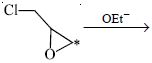
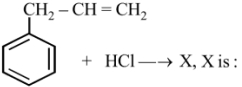
The major product in the given reaction is :
- A
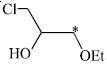
- B
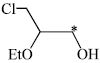
- C

- ✓
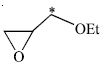
Generate a complete, print-ready paper with questions like this in minutes — across 16+ boards, with answer keys.
$C{{H}_{3}}-C{{H}_{2}}-COOH\xrightarrow{PC{{l}_{3}}}I\xrightarrow{{{C}_{6}}{{H}_{6}}/AlC{{l}_{3}}}II\xrightarrow[\text{base/heat}]{N{{H}_{2}}-N{{H}_{2}}}III$
$Toluene\,\, \xrightarrow[{2.\,{H^ + }}]{{1.\,KMn{O_4}/O{H^ - }}}I\xrightarrow{{SOC{l_2}}}II\xrightarrow{{N{H_3}}}III\xrightarrow{{OB{r^ - }}}IV$ is
$(I)$ Number of $S-S$ bonds in $H_2S_nO_6$ are $(n + 1)$
$(II)$ When $F_2$ reacts with water gives $HF, O_2$ and $O_3$
$(III)$ $LiNO_3$ and $BaCl_2$ compounds are used in fire works
$(IV)$ $Be$ and $Mg$ hydrides are ionic and polymeric
$A$. All the transition metals except scandium form $MO$ oxides which are ionic.
$B$. The highest oxidation number corresponding to the group number in transition metal oxides is attained in $Sc _2 O _3$ to $Mn _2 O _7$.
$C$. Basic character increases from $V _2 O _3$ to $V _2 O _4$ to $V _2 O _5$.
$D$. $V _2 O _4$ dissolves in acids to give $VO _4^{3-}$ salts.
$E$. $CrO$ is basic but $Cr _2 O _3$ is amphoteric.
Choose the correct answer from the options given below: