MCQ
The mass number of a nucleus is:
- AAlways less than its atomic number.
- BAlways more than its atomic number.
- CEqual to its atomic number.
- DSometimes more than and sometimes equal to its atomic number.
Explanation:
Mass number of a nucleus is defined as the sum of the number of neutron and protons present in the nucleus, i.e. the number of nucleons in the nucleus, whereas atomic number is equal to the number of protons present. Therefore, the atomic number is smaller than the mass number. But in the nucleus (like that of hydrogen 1H1), only protons are present. Due to this, the mass number is equal to the atomic number.
Generate a complete, print-ready paper with questions like this in minutes — across 16+ boards, with answer keys.
A hollow conducting sphere is placed in an electric field produced by a point charge placed at P as shown in figure. Let  be the potentials at points A, B and C respectively. Then

|
(a) |
(b) |
(c) |
(d) |
There is a uniform electric field of strength  along y-axis. A body of mass 1g and charge
  is projected into the field from origin along the positive x-axis with a velocity 10m/s. Its speed in m/s after 10s is (Neglect gravitation)
|
(a) 10 |
(b) 5 |
(c) 10 |
(d) 20 |
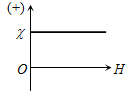
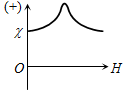
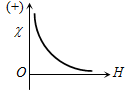
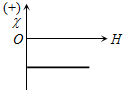
The variation of magnetic susceptibility (x) with magnetising field for a paramagnetic substance is
|
(a)
|
(b)
|
(c)
|
(d)
|
A small sphere carrying a charge ‘q’ is hanging in between two parallel plates by a string of length L. Time period of pendulum is  . When parallel plates are charged, the time period changes to T . The ratio
  is equal to

|
(a) |
(b) |
(c) |
(d) None of these |
The activity of a radioactive sample is measured as 9750 counts per minute at t = 0 and as 975 counts per minute at t = 5 minutes. The decay constant is approximately
|
(a) 0.230 per minute |
(b) 0.461 per minute |
|
(c) 0.691 per minute |
(d) 0.922 per minute |
As shown in the figure, charges +q and -q are placed at the vertices B and C of an isosceles triangle. The potential at the vertex A is

|
(a) |
(b) Zero |
(c) |
(d) |
Electric charge is uniformly distributed along a long straight wire of radius 1mm. The charge per cm length of the wire is Q coulomb. Another cylindrical surface of radius 50 cm and length 1m symmetrically encloses the wire as shown in the figure. The total electric flux passing through the cylindrical surface is

|
(a) |
(b) |
(c) |
(d) |