MCQ
The most frequent value in a data set is?
  • A
    Median
  • Mode
  • C
    Arithmetic mean
  • D
    Arithmetic mean

Answer

Correct option: B.
Mode
Mode is the highest occurring figure in a series.
It is the value in a series of observation that repeats maximum number of times and, which represents the whole series as most of the values, in the series revolves around this value.
Therefore, mode is the value that occurs the most frequent times in a series.

Need a full question paper?

Generate a complete, print-ready paper with questions like this in minutes — across 16+ boards, with answer keys.
Start Generating Free

Similar questions

Let $P(n) : n^2 + n + 1$ is an even integer. If $P(k)$ is assumed true then $P(k + 1)$ is true. Therefore $P(n)$ is true.
If ${( - 7 - 24i)^{1/2}} = x - iy,$ then ${x^2} + {y^2} = $
The value of $n \in Z$ for which the function $f(x) = \frac{{\sin nx}}{{\sin (x/n)}}$ has $4\pi $ as its period, is
If $A = \{x, y\}$ then the power set of $A$ is:
If $100$ times the $100^{th}$ term of an $AP$ with non$-$zero common difference equals the $50$ times its $50^{th}$ term, then the $150^{th}$ term of this $AP$ is:
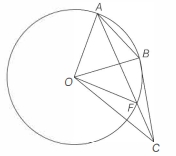
On the circle with center $O$, points $A$ and $B$ are such that $O A=A B$. A point $C$ is located on the tangent at $B$ to the circle such that $A$ and $C$ are on the opposite sides of the line $O B$ and $A B=B C$. The line segment $A C$ intersects the circle again at $F$. Then, the ratio $\angle B O F: \angle B O C$ is equal to
If $f(x + y) = f(x) + f(y)$ for all $x, y \in R$ and $f(1) = 1$, then value of $\mathop {\lim }\limits_{x \to 0} \frac{{{2^{f(\tan x)}} - {2^{f(\sin x)}}}}{{f(\tan x) - f(\sin x)}}$
Let $\mathrm{x}_1, \mathrm{x}_2, \mathrm{x}_3, \mathrm{x}_4$ be the solution of the equation $4 x^4+8 x^3-17 x^2-12 x+9=0$ and $\left(4+x_1^2\right)\left(4+x_2^2\right)\left(4+x_3^2\right)\left(4+x_4^2\right)=\frac{125}{16} m$. Then the value of $\mathrm{m}$ is..........
Let $T(k)$ be the statement $1 + 3 + 5 +...+ (2k – 1) = k + 10$ Which of the following is correct?
If the line $l_1: 3 y -2 x =3$ is the angular bisector of the lines $l_2: x - y +1=0$ and $l_3: \alpha x +\beta y +17=0$, then $\alpha^2+\beta^2-\alpha-\beta$ is equal to