MCQ
The natural petroleum contains
  • A
    Saturated hydrocarbons
  • B
    Cyclic saturated hydrocarbons
  • C
    Compounds of sulphur
  • All of these

Answer

Correct option: D.
All of these
d
The hydrocarbons in crude oil are mostly alkanes (paraffins), cycloalkanes (naphthenes) and various aromatic hydrocarbons while the other organic compounds contain nitrogen, oxygen and sulfur, and trace amounts of metals such as iron, nickel, copper and vanadium.

Need a full question paper?

Generate a complete, print-ready paper with questions like this in minutes — across 16+ boards, with answer keys.
Start Generating Free

Similar questions

In the cell  $Pt(s)| H_2 (g,1\,bar)| HCl(aq)| AgCl(s)| Ag(s)| Pt(s)$ the cell potential is $0.92\,V$ when a $10^{-6}$ molal $HCl$ solution is used. The standard electrode potential of $(AgCl / Ag,Cl^- )$ electrode is ............. $\mathrm{V}$ $\left\{ {Given,\frac{{2.303RT}}{F} = 0.06\,V\,at\,298\,K} \right\}$ 
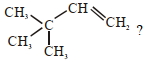
What is the major product formed by $HI$ on reaction with ${image}$
Maximum unpaired electrons are present in
Which of the following statements is correct
For the energy levels in an atom which one of the following statements is correct ?
The first order rate constant for a certain reaction increases from $1.667 \times 10^{-6}\, s^{-1}$ at $727\,^oC$ to $1.667 \times 10^{-4}\,s^{-1}$ at $1571\,^oC$. The rate constant at $1150\,^oC$, assuming constancy of activation energy over the given temperature range is [Given : $log \,19.9 = 1.299$ ]
What is the work done when $1\, mole$ of a gas expands isothermally and reversibly from $25\, L$ to $250\, L$ at a temperature of $300\, K$?....$J$
Incorrect set is

 $(a)$ Ionisation energy $(Na < Li < B < Be)$

$(b)$ Electron affinity $(N < P < O < S)$

$(c)$ Electron negativity $(S < O < Cl < F)$

$(d)$ Atomic radii $(F < N < O < Na)$

Reactivity of given alcohols for acidic dehydration can be explained by

$\begin{array}{*{20}{c}}
  {Ph - C{H_2} - CH - C{H_3}} \\ 
  {\,\,\,\,\,\,\,\,\,\,\,\,|\,\,\,\,} \\ 
  {\,\,\,\,\,\,\,\,\,\,\,\,\,OH\,} 
\end{array}$ $>$ $\begin{array}{*{20}{c}}
  {Me - C{H_2} - CH - C{H_3}} \\ 
  {\,\,\,\,\,\,\,\,\,\,\,\,\,\,|\,\,\,\,} \\ 
  {\,\,\,\,\,\,\,\,\,\,\,\,\,\,\,OH\,} 
\end{array}$

The potential for the given half cell at $298 \mathrm{~K}$ is $(-)$ $(-) \ldots \ldots \ldots . . \times 10^{-2} \mathrm{~V} .$

$2 \mathrm{H}_{(\mathrm{aq})}^{+}+2 \mathrm{e}^{-} \rightarrow \mathrm{H}_2(\mathrm{~g})$

${\left[\mathrm{H}^{+}\right]=1 \mathrm{M}, \mathrm{P}_{\mathrm{H}_2}=2 \mathrm{~atm}}$

(Given: $2.303 \mathrm{RT} / \mathrm{F}=0.06 \mathrm{~V}, \log 2=0.3$ )