The $ P.E.$ of a particle executing $SHM$ at a distance $x$ from its equilibrium position is
Easy


Download our appand get started for free
Experience the future of education. Simply download our apps or reach out to us for more information. Let's shape the future of learning together!No signup needed.*
Similar Questions
- 1Two masses $m_1$ and $m_2$ connected by a spring of spring constant $k$ rest on a frictionless surface. If the masses are pulled apart and let go, the time period of oscillation isView Solution
- 2A block of rectangular size of mass $m$ and area of cross-section $A$, floats in a liquid of density $\rho$. If we give a small vertical displacement from equilibrium, it undergoes $S H M$ with time period $T$, thenView Solution
- 3The velocity vector $v$ and displacement vector $x$ of a particle executing SHM are related as $\frac{v d v}{d x}=-\omega^2 x$ with the initial condition $v=v_0$ at $x=0$. The velocity $v$, when displacement is $x$, isView Solution
- 4As a body performs $S.H.M.$, its potential energy $U.$ varies with time as indicated inView Solution
- 5A particle of mass $m$ performs $SHM$ along a straight line with frequency $f$ and amplitude $A.$View Solution
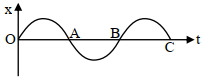
- 6A point mass oscillates along the x-axis according to the law $x=x_0cos$$\left( {\omega t - \frac{\pi }{4}} \right)$ If the acceleration of the particle is written as $a=Acos$$\left( {\omega t + \delta } \right)$ thenView Solution
- 7A particle executing a simple harmonic motion of period $2\ s$ . When it is at its extreme displacement from its mean position, it receives an additional energy equal to what it had in its mean position. Due to this , in its subsequent motion,View Solution
- 8A particle executes $SHM $ in a line $4\, cm $ long. Its velocity when passing through the centre of line is $12\, cm/s$. The period will be ..... $s$View Solution
- 9View SolutionWhat effect occurs on the frequency of a pendulum if it is taken from the earth surface to deep into a mine
- 10The variation of displacement with time of a particle executing free simple harmonic motion is shown in the figure. The potential energy ${U}({x})$ versus time $({t})$ plot of the particle is correctly shown in figure:View Solution