Question
The phenomenon utilised in an optical fibre is(a) Refraction(b) Interference(c) Polarization(d) Total internal reflection


Answer

(d) Total internal reflection

Need a full question paper?

Generate a complete, print-ready paper with questions like this in minutes — across 16+ boards, with answer keys.
Start Generating Free

Similar questions

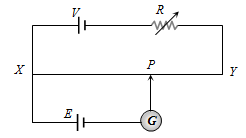
A potentiometer circuit shown in the figure is set up to measure e.m.f. of a cell $E.$ As the point $P$ moves from $X$ to $Y$ the galvanometer $G$ shows deflection always in one direction, but the deflection decreases continuously until $Y$ is reached. In order to obtain balance point between $X$ and $Y$ it is necessary to
Two magnets $A$ and $B$ are identical in mass, length and breadth but have different magnetic moments. In a vibration magnetometer, if the time period of $B$ is twice the time period of $A.$ The ratio of the magnetic moments
$\mathrm{M}_{\mathrm{A}} / \mathrm{M}_{\mathrm{B}}$ ot the magnets will be
Which of the following waves have the maximum wavelength(a) X-rays             (b) I.R. rays(c) UV rays(d) Radio waves
       
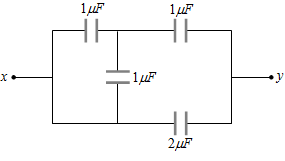
Four capacitors are connected as shown in the figure. Their capacities are indicated in the figure. The effective capacitance between points $x$  and $y$  is $($in $μF)$
A beam of electrons and protons move parallel to each other in the same direction, then they(a) Attract each other(b) Repel each other(c) No relation  (d) Neither attract nor repel
   
   
Diffusion current in a p-n junction is greater than the drift current in magnitude:
1 Pico farad =
Three equal positive charges are kept at the corners of an equilateral triangle. What will be the vector sum of the forces acting on the particles?
The coefficient of self inductance of a solenoid is 0.18 mH. If a crode of soft iron of relative permeability 900 is inserted, then the coefficient of self inductance will become nearly(a)  5.4 mH(b) 162 mH(c)  0.006 mH(d) 0.0002 mH
       
Two non-ideal identical batteries are connected in parallel. Consider the following statements      
(i) The equivalent e.m.f. is smaller than either of the two e.m.f.s
(ii) The equivalent internal resistance is smaller than either of the two internal resistances