MCQ
The physical quantity $'$Energy Density$'$ has same dimensional formula as
  • A
    Pressure
  • B
    Stress
  • C
    Young's modulus of elasticity
  • All of these

Answer

Correct option: D.
All of these
d

Need a full question paper?

Generate a complete, print-ready paper with questions like this in minutes — across 16+ boards, with answer keys.
Start Generating Free

Similar questions

A person sitting in an open car moving at constant velocity throws a ball vertically up into air. The ball falls
A mass $'m'$ moves with a velocity $'v'$ and collides inelastically with another identical mass in rest. After collision the $I^{st}$ mass moves with velocity $\frac{v}{{\sqrt 3 }}$ in a direction perpendicular to the initial direction of motion. Find the speed of the $2^{nd}$ mass after collision
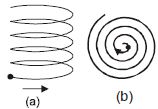
A particle is going with constant speed along a uniform helical and spiral path separately as shown in figure
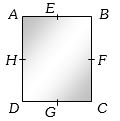
In a rectangle $ABCD\,\,(BC = 2AB)$. The moment of inertia along which axis will be minimum
During the motion of a lift, apparent weight of a body becomes twice its actual weight when,
A perfectly elastic uniform string is suspended vertically with its upper end fixed to the ceiling and the lower end loaded with the weight. If a transverse wave is imparted to the lower end of the string, the pulse will
The relation between time ' $t$ ' and distance ' $x$ ' is $t=$ $\alpha x^2+\beta x$, where $\alpha$ and $\beta$ are constants. The relation between acceleration $(a)$ and velocity $(v)$ is:
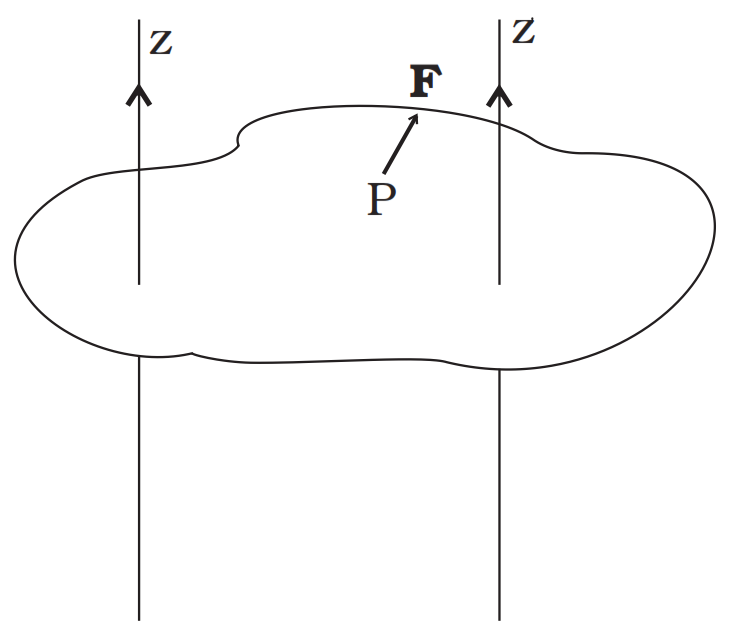
Shows a lamina in x-y plane. Two axes z and z′ pass perpendicular to its plane. A force F acts in the plane of lamina at point P as shown. Which of the following are true? (The point P is closer to z′-axis than the z-axis)

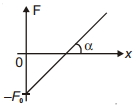
An object starts from rest and is acted upon by a variable force $F$ as shown in figure. If $F_0$ is the initial value of the force, then the position of the object, where it again comes to rest will be
If angular velocity of a disc depends an angle rotated $\theta$ as $\omega = \theta ^2 + 2\theta$ , then its angular acceleration $\alpha$ at $\theta = 1$ $rad$ is  ......... $ rad/sec^2$.