MCQ
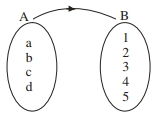
The probability that a randomly chosen one-one function from the set $\{a, b, c, d\}$ to the set $\{1,2,3,4,5\}$ satisfies $f(a)+2 f(b)-f(c)=f(d)$ is
  • A
    $\frac{1}{24}$
  • B
    $\frac{1}{40}$
  • C
    $\frac{1}{30}$
  • $\frac{1}{20}$

Answer

Correct option: D.
$\frac{1}{20}$
d
$n ( s )=5_{ c _{4}} \times 4 !=120$ 

$f ( a )$       + $2 f(b)$        = $f ( c )$       + $f ( d )$
$5$ $2 \times 1$ $4$ $4$
$4$ $2 \times 2$ $3$ $5$
$1$ $2 \times 3$ $2$ $5$

$n ( A )=2 \times 3=6$

$\therefore P ( A )=\frac{ n ( A )}{ n ( s )}=\frac{6}{120}=\frac{1}{20}$
Need a full question paper?

Generate a complete, print-ready paper with questions like this in minutes — across 16+ boards, with answer keys.

Start Generating Free

Similar questions

Evaluate: $\int\frac{1}{\sqrt{9+8\text{x}-\text{x}^2}}\text{dx}.$
The corner points of the feasible region in the graphical representation of a linear programming problem are $(2,72),(15,20)$ and $(40,15)$. If $z=18 x+9 y$ be the objective function, then:
The value of $\int\frac{\text{d}(\text{x}^2+1)}{\sqrt{\text{x}^2+2}}$ is:
If $y = c{e^{{{\sin }^{ - 1}}x}}$, then corresponding to this the differential equation is
If $y=y(x)$ is the solution curve of the differential equation $x^{2} d y+\left(y-\frac{1}{x}\right) d x=0 \quad ; x>0$ and $\mathrm{y}(1)=1$, then $\mathrm{y}\left(\frac{1}{2}\right)$ is equal to :
If $f(x) = x + 2,$ then $f'(f(x))$ at $x = 4$ is
A fair die is thrown twenty times. The probability that on the tenth throw the fourth six appears is:
Find the value of x, if $\begin{bmatrix}2&5\\3&\text{x}\end{bmatrix}=\begin{bmatrix}\text{x}&-1\\5&3\end{bmatrix}$ is:
Choose the correct answer from the given four options.The general solution of the differential equation $(\text{e}^{\text{x}}+1)\text{ydy}=(\text{y}+1)\text{e}^{\text{x}}$ is:
Let the vectors $\overrightarrow{ a }, \overrightarrow{ b }, \overrightarrow{ c }$ be such that $|\overrightarrow{ a }|=2,|\overrightarrow{ b }|=4$ and $|\overrightarrow{ c }|=4 .$ If the projection of $\overrightarrow{ b }$ on $\overrightarrow{ a }$ is equal to the projection of $\overrightarrow{ c }$ on $\overrightarrow{ a }$ and $\overrightarrow{ b }$ is perpendicular to $\overrightarrow{ c },$ then the value of $|\overrightarrow{ a }+\overrightarrow{ b }-\overrightarrow{ c }|$ is