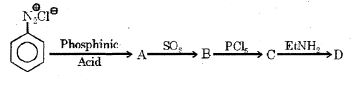
The product obtained from the reaction is

- A
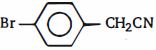
- B
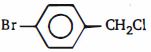
- C
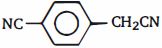
- D
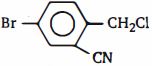
Difficult


Download our appand get started for free
Experience the future of education. Simply download our apps or reach out to us for more information. Let's shape the future of learning together!No signup needed.*
Similar Questions
- 1when $(P)$ undergoes Hoffmann exhaustive methylation (twice) then the product obtained will beView Solution

- 2An organic compound $(C_3H_9N)\,\, (A),$ when treated with nitrous acid, gave an alcohol and $N_2$ gas was evolved. $(A)$ on warming with $CHCl_3$ and caustic potash gave $(C)$ which on reduction gave isopropylmethylamine. Predict the structure of $(A).$View Solution
- 3View SolutionWhich amine will not react with nitrous acid :
- 4Identify the product $Z$ in the seriesView Solution
$C{H_3}CN\xrightarrow{{Na + {C_2}{H_5}OH}}X\xrightarrow{{HN{O_2}}}Y\mathop {\xrightarrow{{{K_2}C{r_2}{O_7}}}}\limits_{{H_2}S{O_4}} Z$
- 5View Solutionlncorrect statement
- 6Two benzyne intermediates are likely to be formed equally. Reaction with amide ion can occur in two different directions with each benzyne, giving three possible products. They are formed in a $1 : 2 : 1$ ratio. Asterisk $(^*)$ refers to $^{14}C.$View Solution
product $(A)$ is

- 7View SolutionWhich of the following reactions does not yield an amine
- 8Which of following does not react with $HNO_2$ ?View Solution
- 9$x =$ moles of $KOH$ consumed isView Solution

- 10View SolutionWhich is the major product of the following reaction?
