The ratio of frequencies of two pendulums are $2 : 3$, then their length are in ratio
Easy


Download our appand get started for free
Experience the future of education. Simply download our apps or reach out to us for more information. Let's shape the future of learning together!No signup needed.*
Similar Questions
- 1A pendulum is suspended in a lift and its period of oscillation when the lift is stationary is $T_0$. What must be the acceleration of the lift for the period of oscillation of the pendulum to be $T_0/2$ ?View Solution
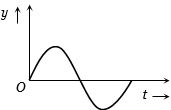
- 2The displacement time graph of a particle executing $S.H.M.$ is as shown in the figureThe corresponding force-time graph of the particle isView Solution
- 3Two bodies $M$ and $N $ of equal masses are suspended from two separate massless springs of force constants $k_1$ and $k_2$ respectively. If the two bodies oscillate vertically such that their maximum velocities are equal, the ratio of the amplitude $M$ to that of $N$ isView Solution
- 4Two masses $m_1$ and $m_2$ connected by a spring of spring constant $k$ rest on a frictionless surface. If the masses are pulled apart and let go, the time period of oscillation isView Solution
- 5View SolutionIdentify correct statement among the following
- 6A $S.H.M.$ is represented by $x = 5\sqrt 2 (\sin 2\pi t + \cos 2\pi t).$ The amplitude of the $S.H.M.$ is .... $cm$View Solution
- 7A particle executes $SHM $ in a line $4\, cm $ long. Its velocity when passing through the centre of line is $12\, cm/s$. The period will be ..... $s$View Solution
- 8A body executes sample harmonic motion under the action of a force $F_1$ with a time period $(4 / 5)\ sec$. If the force is changed to $F_ 2$ it executes $SHM$ with time period $(3 / 5)\ sec$. If both the forces $F_1$ and $F_2$ act simultaneously in the same direction on the body, it's time period (in $second$) isView Solution
- 9The total energy of the body executing $S.H.M.$ is $E$. Then the kinetic energy when the displacement is half of the amplitude, isView Solution
- 10Three simple harmonic motions of equal amplitudes $A$ and equal time periods in the same direction combine. The phase of the second motion is $60^o$ ahead of the first and the phase of the third motion is $60^o$ ahead of the second. Find the amplitude of the resultant motionView Solution