MCQ
The reaction $^2_1\text{H}$+$^2_1\text{H}$→$^3_2\text{H}$+$^1_0\text{n}$ is called:
- AFusion
- BFission
- CEndothermic reaction
- DSpontaneous reaction
Explanation:
Fusion is the process that powers the sun and the stars. It is the reaction in which two atoms of hydrogen combine together or fuse to form an atom of helium. In this process some of the mass of the hydrogen converted into energy.
Generate a complete, print-ready paper with questions like this in minutes — across 16+ boards, with answer keys.
The work done in bringing a 20 coulomb charge from point A to point B for distance 0.2m is 2J. The potential difference between the two points will be (in volt)
|
(a) 0.2 |
(b) 8 |
(c) 0.1 |
(d) 0.4 |
To make the field radial in a moving coil galvanometer
|
(a) The number of turns in the coil is increased |
|
(b) Magnet is taken in the form of horse-shoe |
|
(c) Poles are cylindrically cut |
|
(d) Coil is wounded on aluminium frame |
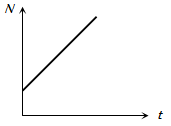
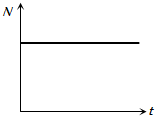
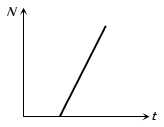
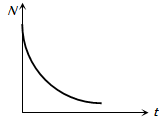
The graph between the instantaneous concentration (N) of a radioactive element and time (t) is
|
(a)
|
(b)
|
(c)
|
(d)
|