MCQ
The reagent used for converting ethanoic acid to ethanol is
- ✓$LiAl{H_4}$
- B$KMn{O_4}$
- C$PC{l_3}$
- D${K_2}C{r_2}{O_7}/{H^ + }$
Generate a complete, print-ready paper with questions like this in minutes — across 16+ boards, with answer keys.
$CH_3COCH_{3(aq)} + Br_{2(aq)} \rightarrow $$CH_3COCH_2Br_{(aq)} + H^+_{(aq)}+ Br^-_{(aq)}$
These kinetic data were obtained for given reaction concentrations.
Initial concentrations, $M$
| $[CH_3COCH_3]$ | $[Br_2]$ | $[H^+]$ |
| $0.30$ | $0.05$ | $0.05$ |
| $0.30$ | $0.10$ | $0.05$ |
| $0.30$ | $0.10$ | $0.10$ |
| $0.40$ | $0.05$ | $0.20$ |
Initial rate, disappearance of $Br_2, \,\,Ms^{-1}$
$5.7 \times 10^{-5} ,$ $5.7 \times 10^{-5} ,$ $1.2 \times 10^{-5} ,$ $3.1 \times 10^{-5}$
Based on these data, the rate equation is
$\begin{array}{*{20}{c}}
{{C_6}{H_5} - C - H} \\
{\,\,\,\,\,\,\,\,\,\,||} \\
{\,\,\,\,\,\,\,\,\,\,\,\,O}
\end{array}\xrightarrow{{N{H_2}OH/{H^ \oplus }}}[X]$
$[X] $ will be :
${(C{H_3}O)_2}CHC{H_2}C{H_2}C{H_2}Br\xrightarrow{{Mg}}\xrightarrow{{{H_2}C = O}}\xrightarrow[{heat}]{{{H_3}{O^ + }}}$
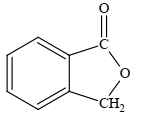
$\mathrm{A} \stackrel{700 \mathrm{K}}{\rightarrow}$ Product
$\mathrm{A}\xrightarrow[\text { catalyst }]{500 \mathrm{K}} $ Product
it was found that $\mathrm{E}_{\mathrm{a}}$ is decreased by $30 \;\mathrm{kJ} / \mathrm{mol}$ in the presence of catalyst.
If the rate remains unchanged, the activation energy for catalysed reaction is (Assume pre exponential factor is same $):$