MCQ
The reagent with which both aldehyde and acetone react easily is
  • A
    Fehling's reagent
  • Grignard reagent
  • C
    Schiff's reagent
  • D
    Tollen's reagent

Answer

Correct option: B.
Grignard reagent
b
(b)$\mathop {R - \mathop C\limits_{\mathop |\limits_H } = O}\limits_{{\rm{Aldehyde}}} \, + \mathop {R - Mg - X}\limits_{{\rm{Grignard}}\,{\rm{reagent}}} \to R - \mathop {\mathop {\mathop {\mathop C\limits^| }\limits^R }\limits_| }\limits_H - OMgX$
$\mathop {R - \mathop C\limits_{\mathop |\limits_R } = O}\limits_{{\rm{Ketone}}} \, + R - Mg - X \to R - \mathop {\mathop {\mathop {\mathop C\limits^| }\limits^R }\limits_| }\limits_R - O - MgX$

Need a full question paper?

Generate a complete, print-ready paper with questions like this in minutes — across 16+ boards, with answer keys.
Start Generating Free

Similar questions

is
$1-$ chlorobutane reacts with alcoholic $ KOH$  to form
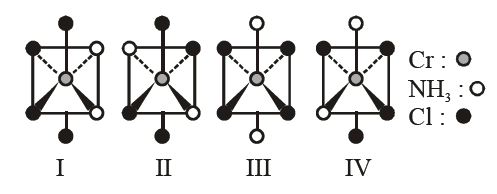
Consider the following isomers of $[Cr(NH_3)_2 Cl_4]^-$ and answer the questions Out of these isomers
Chloroform for anesthetic purposes is tested for its purity with the reagent
Which of the following would be the best synthesis of $2,2-$ dimethyl propanoic acid ?
Select the correct statement 
Which of the following product is not formed in the following reaction
Consider separate solutions of $0.500\, M\, C_2H_5OH\,(aq),$ $0.100\,M\,Mg_3(PO_4)_2\, (aq), $ $0.250\, M\,KBr\,(aq)$ and $0.125\, M\,Na_3PO_4\,(aq)$ at $25^o C.$ Which statement is true about these solutions, assuming all salts to be strong electrolytes ?
Which of the following halogen oxides is ionic
The concentration of potassium ions inside a biological cell is at least twenty times higher than the outside. The resulting potential difference across the cell is important in several processes such as transmission of nerve impulses and maintaining the ion balance. A simple model for such a concentration cell involving a metal $\mathrm{M}$ is:

$\mathrm{M}(\mathrm{s}) \mid \mathrm{M}^{+}$(aq; $0.05$ molar) || $\mathrm{M}^{+}(\mathrm{aq}), 1$ molar) $\mid \mathrm{M}(\mathrm{s})$

For the above electrolytic cell the magnitude of the cell potential $\left|E_{\text {cell }}\right|=70 \mathrm{mV}$.

$1.$ For the above cell

$(A)$ $\mathrm{E}_{\text {cell }}<0 ; \Delta \mathrm{G}>0$ $(B)$ $\mathrm{E}_{\text {cell }}>0 ; \Delta \mathrm{G}<0$

$(C)$ $\mathrm{E}_{\text {cell }}<0 ; \Delta \mathrm{G}^{\circ}>0$ $(D)$ $\mathrm{E}_{\text {cell }}>0 ; \Delta \mathrm{G}^{\circ}>0$

$2.$ If the $0.05$ molar solution of $\mathrm{M}^{+}$is replaced by $0.0025$ molar $\mathrm{M}^{+}$solution, then the magnitude of the cell potential would be

$(A)$ $35 \mathrm{mV}$ $(B)$ $70 \mathrm{mV}$ $(C)$ $140 \mathrm{mV}$ $(D)$ $700 \mathrm{mV}$

Give the answer question $1,2.$