MCQ
The second ionization potential is
  • A
    Less than the first ionization potential
  • B
    Equal to the first ionization potential
  • Greater than the first ionization potential
  • D
    None of these

Answer

Correct option: C.
Greater than the first ionization potential
c
(c) Greater than the first ionization energy because after removal one ${e^ - }$, effective nuclear charge increases.

Need a full question paper?

Generate a complete, print-ready paper with questions like this in minutes — across 16+ boards, with answer keys.

Start Generating Free

Similar questions

Sodium acetate can be converted to ethane by
Degenerate orbitals means
In which of the following processes, the bond order increases and paramagnetic character changes to diamagnetic one?
For the second period elements the correct increasing order of first ionisation enthalpy is
How many number of molecules and atoms respectively are present in 2.8L of a diatomic gas at STP?
Consider the following statements

$(I)$ The radius of an anion is larger than that of the parent atom. 

$(II)$ The ionization energy generally increases with increasing atomic number  in a period.

$(III)$ The electronegativity of an element is the tendency of an isolated atom  to attract an electron.

Which of the above statements is/are correct?
Number of $P-H, P-O - P, P-O-H$ and $P-O$ bonds in sodium dihydrogen pyrophosphate respectively are 
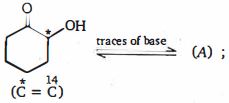
Unknown compound $(A)$ is
The heats of combustion of carbon and carbon monoxide are $-393.5$ and $-283.5\, kJ\, mol^{-1},$ respectively. The heat offormation (in $kJ$) of carbon monoxide per mole is :
Based on the following thermochemical equations

${H_2}O\left( g \right) + C\left( s \right) \to CO\left( g \right) + {H_2}\left( g \right);\Delta H = 131\,kJ$

$CO\left( g \right) + \frac{1}{2}{O_2}\left( s \right) \to C{O_2}\left( g \right);\Delta H =  - 282\,kJ$

${H_2}\left( g \right) + \frac{1}{2}{O_2}\left( s \right) \to {H_2}O\left( g \right);\Delta H =  - 242\,kJ$

$C(s) + O_2(g) \to CO_2(g); \Delta H = X\,kJ$

The value of $X$ will be......$kJ$