MCQ
The secondary battery is such a battery:
  • A
    Which cannot be recharged.
  • B
    Which can be recharged.
  • C
    Which can be reused after replacing its chemical.
  • D
    Which is charged by primary cells.

Answer

  1. Which can be recharged.

Explanation:

A secondary battery cell is one in which chemical energy is converted into electrical energy, but they work only when they are charged by passing electric current through them by some source.

Need a full question paper?

Generate a complete, print-ready paper with questions like this in minutes — across 16+ boards, with answer keys.
Start Generating Free

Similar questions

Cumene process is the most important commercial method for the manufacture of phenol. Cumene is
At $ 300\,K$, when a solute is added to a solvent its vapour pressure over the mercury reduces from $50\,mm$ to $45\,mm$. The value of mole fraction of solute will be
The reaction $A \to B$ follows first order kinetics. The time taken for $0.8\,mole$ of $A$  to produce $ 0.6\,mole$ of $B$ is $1$ hour . What is the time taken for conversion of $0.9\,mole$ of $A$  to produce $0.675\,mole$ of $ B$ ......... $hr$
The correct order of $S_N1$ reactivity is
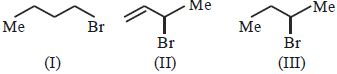
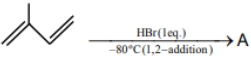
In which of the following product is correct
$ \, $
In the Hall process, aluminium is produced by the electrolysis of molten $Al_2O_3$. How many second would it take to produce enough aluminium by the Hall process to make a case of $24$ cans of aluminium soft-drink, if each can uses $5.0\,g$ of $Al$, a current of $9650\,amp $ is employed, and the current efficiency of the cell is $90.0\%$
Most acidic among given compound is
In the isoelectronic series of metal carbonyl, the $CO$ bond strength is expected to  increase in the order
$\begin{array}{*{20}{c}}
  {\,\,\,\,\,\,\,\,\,\,\,\,\,\,\,\,\,\,\,\,\,\,\,\,\,\,\,\,\,\,\,\,\,\,\,\,\,\,\,\,\,\,\,\begin{array}{*{20}{c}}
  {\,\,\,\,\,\,\,\,\,\,\,\,\,\,\,\,\,\,\,\,\,\,\,\,\,\,\,\,\,\,HOC{H_2}} \\ 
  \,\,\,\,\,\,\,\,\,\,\,\,\,\,\,\,| 
\end{array}} \\ 
  {{H_2}C = CH - C{H_2} - C{H_2} - C - OH} \\ 
  {\,\,\,\,\,\,\,\,\,\,\,\,\,\,\,\,\,\,\,\,\,\,\,\,\,\,\,\,\,\,\,\,\,\,\,\,\,\,\,\,\,\,\,\,\,\,\,\,\,\,\,\,\,\,\,\,\,|} \\ 
  {\,\,\,\,\,\,\,\,\,\,\,\,\,\,\,\,\,\,\,\,\,\,\,\,\,\,\,\,\,\,\,\,\,\,\,\,\,\,\,\,\,\,\,\,\,\,\,\,\,\,\,\,\,\,\,\,\,\,\,\,\,\,\,\,\,\,\,\,\,\,\,\,\,\,\,\,\,\,\,\,\,\,\,C{H_2} - C{H_3}} 
\end{array}$ $\xrightarrow[{TsOH}]{{\begin{array}{*{20}{c}}
  O \\ 
  {||} \\ 
  {C{H_3} - C - C{H_3}} 
\end{array}}}(A)$ $\xrightarrow[{{{(C{H_3})}_2}S}]{{{O_3}}}(B) + HCHO$ Product $(B)$ is