Question
The slits in a Young's double slit experiment have equal width and the source is placed symmetrically with respect to the slits. The intensity at the central fringe is I0. If one of the slits is closed, the intensity at this point will be:

  1. $\text{I}_0$

  2. $\frac{\text{I}_0}{4}$

  3. $\frac{\text{I}_0}{2}$

  4. $4\text{I}_0$

Answer

  1. $\frac{\text{I}_0}{4}$

Explanation:

Total intensity coming from the source is Iwhich is present at the central maxima. In case of two slits, the intensity is getting distributed between the two slits and for a single slit, the amplitude of light coming from the slit is reduced to half which leads to $\frac{1}{4}\text{th}$ of intensity.

Need a full question paper?

Generate a complete, print-ready paper with questions like this in minutes — across 16+ boards, with answer keys.

Start Generating Free

Similar questions

The frequency of revolution of a charged particle in a cyclotron does not depend on ‘X’. Identify X.
Consider a photon of continuous X-ray and a photon of characteristic X-ray of the same wavelength. Which of the following is/are different for the two photons?
  1. Frequency.
  2. Energy.
  3. Penetrating power.
  4. Method of creation.
Which of the following quantities are always zero in a simple harmonic motion?

  1. $\overrightarrow{\text{F}}\times\overrightarrow{\text{a}}$

  2. $\overrightarrow{\text{v}}\times\overrightarrow{\text{r}}$

  3. $\overrightarrow{\text{a}}\times\overrightarrow{\text{r}}$

  4. $\overrightarrow{\text{F}}\times\overrightarrow{\text{r}}$

An electromagnetic wave going through vacuum is described by $\text{E}=\text{E}_0\sin(\text{kx}-\omega\text{t}),\text{ B}=\text{B}_0\sin(\text{kx}-\omega\text{t})$ Then:

  1. $\text{E}_0\text{k}=\text{B}_0\omega$

  2. $\text{E}_0\text{B}_0=\omega\text{k}$

  3. $\text{E}_0\omega=\text{B}_0\text{k}$

  4. None of these.

In the previous question, the smallest kinetic energy at the bottom of the incline will be achieved by:
  1. The solid sphere.
  2. The hollow sphere.
  3. The disc.
  4. All will achieve same kinetic energy.

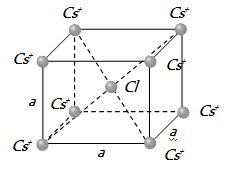
What is the net force on a Cl placed at the centre of the bcc structure of CsCl

(a) Zero   

(b)  

(c)  

(d) Data is incomplete

The energy band gap of Si  is

(a) 0.70 eV

(b) 1.1 eV

(c) Between 0.70 eV  to 1.1 eV

(d) 5 eV

The capacity of a spherical conductor in MKS system is

(a)    

(b)

(c)  

(d)  

The focal lengths of the objective and eye lens of a microscope are 4 cm and 8 cm respectively and the distance of the object from the objective is 4.5 cm , then the magnifying power will be :
Two particle of mass m and 2m moving in opposite direction collide head on. They have same de-Broglie wavelength before collision after the collision.